A Tucson Homeowner’s Guide to Choosing the Right Drain-Cleaning Method
By Brian Dunn, Owner | Dunn Plumbing & Drain Service LLC
Contributions from Cory Harding, Licensed Contractor & Plumbing Expert
When a drain stops working, homeowners usually do not care which machine the plumber brings through the front door.
They want the water to go down.
Fair enough.
But drain snaking and hydro jetting do different jobs, and understanding that difference can help explain why one clogged drain may cost relatively little to clear while another requires a more thorough cleaning.
Brian Dunn describes the difference this way:
A cable can open a clog. Hydro jetting is often used when the pipe itself needs cleaning.
Neither method is automatically better.
The correct choice depends on:
Sometimes the answer is snaking.
Sometimes it is hydro jetting.
And sometimes neither one will repair the actual problem.
Let’s look at the difference.
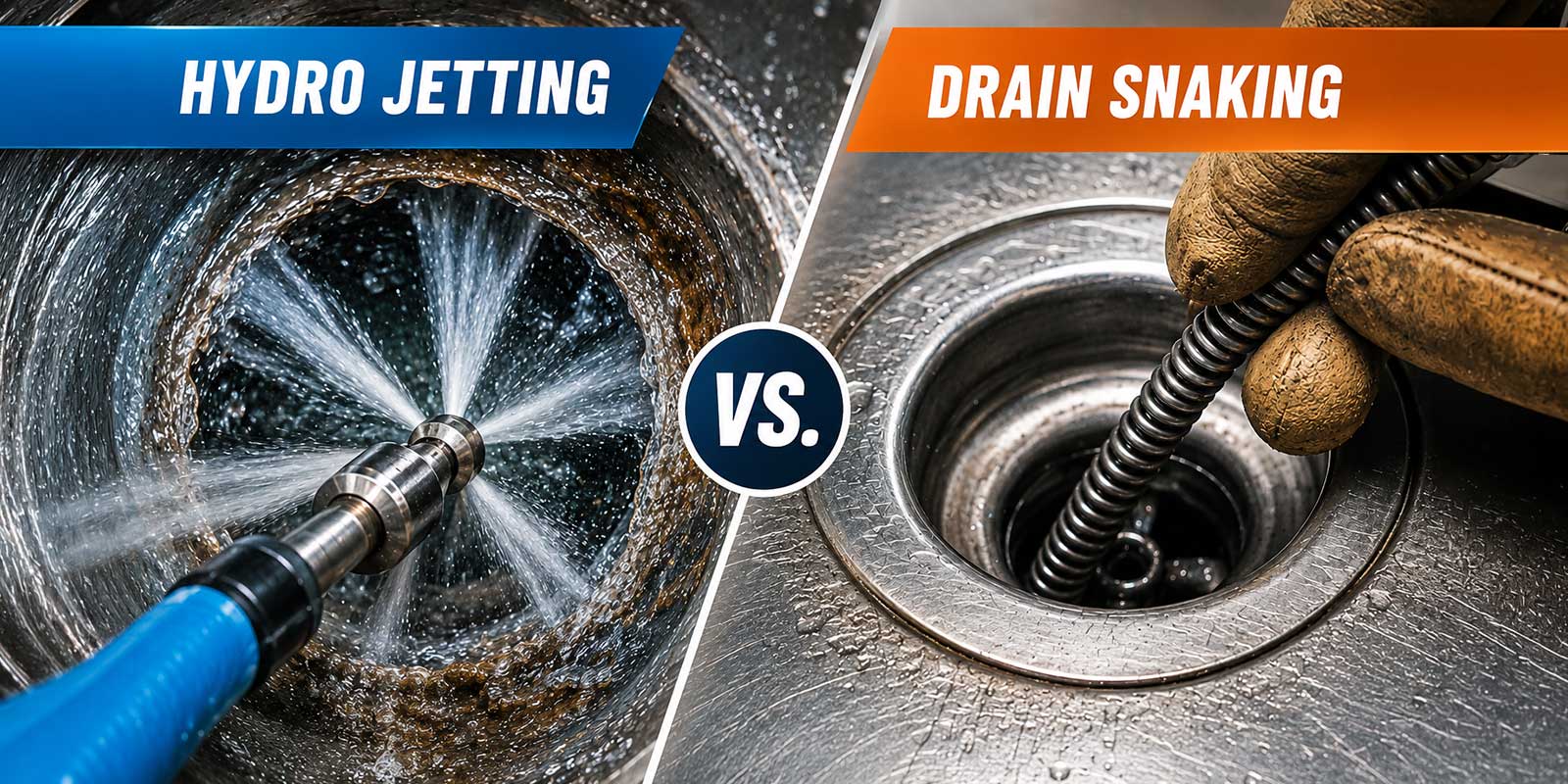
Quick Answer: Hydro Jetting vs. Snaking
Drain Snaking
Drain Snaking
Best used for many ordinary blockages.
A cable travels through the drain and uses an appropriate head to break through, retrieve, or clear the obstruction.
Advantages:
Hydro Jetting
Uses high-pressure water and specialized nozzles to clean buildup from the inside of suitable piping.
Advantages:
The simplest explanation:
Snaking opens the road.
Hydro jetting cleans the road.
But a professional should evaluate the road’s condition first.
Arizona.
How Does a Drain Snake Work?
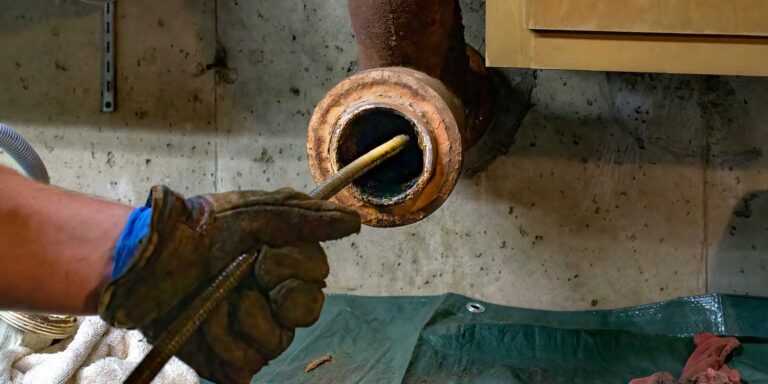
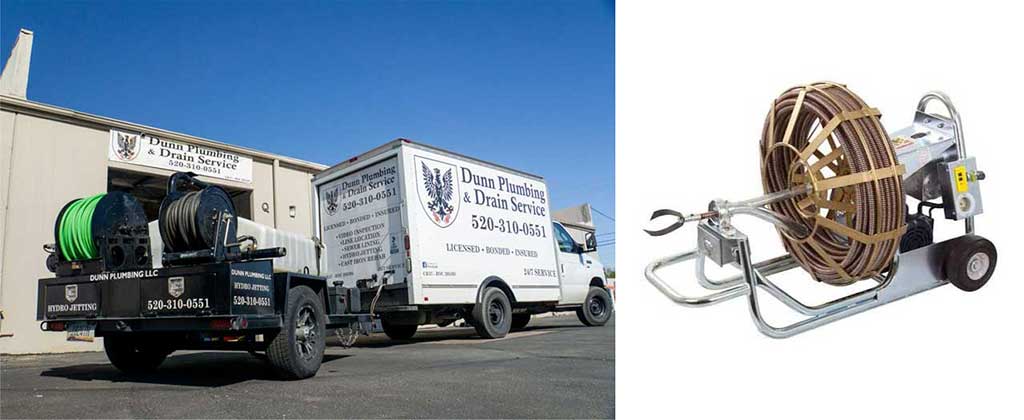
Professional drain machines use flexible cables that enter the drainage system and travel toward the obstruction.
Different cable heads can be used depending on the problem.
That sounds straightforward until you see the inside of a professional drain truck.
Why so many machines?
Brian says different drains require different treatments.
Cory explains that larger drains require larger, stronger cables and that an average home may contain numerous drain-pipe sizes.
Cable choice can vary based on:
That is why the plumber does not simply grab “the snake.”
There isn’t just one.
When Is Snaking the Right Choice?
Cabling is excellent for many ordinary drain blockages.
Examples may include:
Sometimes a simple clog really is a simple clog.
There is no prize for using the largest piece of equipment available.
If the appropriate cable clears the obstruction and inspection shows a healthy line, hydro jetting may not be necessary.
That is an important point.
More expensive is not automatically better.
The correct service is better.
What Is Hydro Jetting?
Hydro jetting uses high-pressure water delivered through specialized hoses and nozzles.
The water travels through the drain while the nozzle directs jets against buildup inside the pipe.
Depending on the system and conditions, hydro jetting can remove:
Instead of only creating a passage through a blockage, jetting can clean material from the interior pipe walls.
Cory says this is especially valuable in kitchen and laundry lines where grease can catch lint and other debris and turn the pipe into what he describes as a “clingy drain system.”
The EPA likewise warns that fats, oils, and grease can accumulate inside sewer piping and contribute to blockages.
Cory’s Corner: Grease Is a Collector
Grease does not simply disappear because hot water carries it down the kitchen sink.
As grease cools and accumulates inside piping, other material can begin sticking to it.
That might include:
Over time, the usable opening inside the pipe becomes smaller.
Cory sees FOG—fats, oils, and grease—as one of the recurring drain problems in Southern Arizona homes.
The EPA’s current guidance similarly advises homeowners to keep cooking oil and grease out of household drainage and wastewater systems.
Cory’s point:
If the walls of the pipe are dirty, simply poking a hole through the middle may not give the homeowner the long-term result they expect.
That is where hydro jetting can become valuable.
Real Job Spotlight: Bathroom and Laundry Drains Were Both Slow
A homeowner contacted Dunn Plumbing because two areas of the house were draining slowly:
The bathroom and the laundry.
The homeowner assumed there were two separate blockages near those fixtures.
That assumption made sense.
But once the drainage system was evaluated, the problem turned out to be broader.
The pipes were coated internally with fats, oils, grease, soap residue, and other accumulated material.
The drains were not simply blocked at two individual locations.
The drainage system needed cleaning.
Dunn Plumbing recommended hydro jetting the appropriate lines.
Using high-pressure water and professional jetting equipment, the team removed the accumulated material coating the drain-line interiors.
Afterward, the bathroom and laundry drains were flowing properly.
This job illustrates the difference between two questions:
“Where is the clog?”
and:
“What condition are the pipes in?”
The homeowner thought they had two clogged fixtures.
The actual problem was buildup throughout the shared drainage system.
Brian Dunn’s Advice: Camera First, Then Decide
Brian does not believe every drain should automatically be hydro jetted.
His first priority is understanding the plumbing.
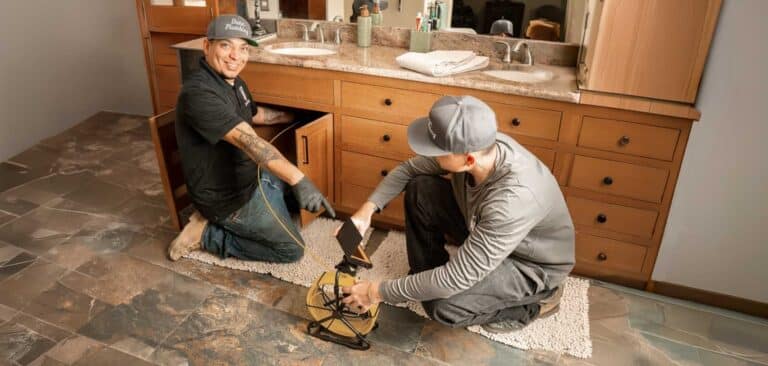
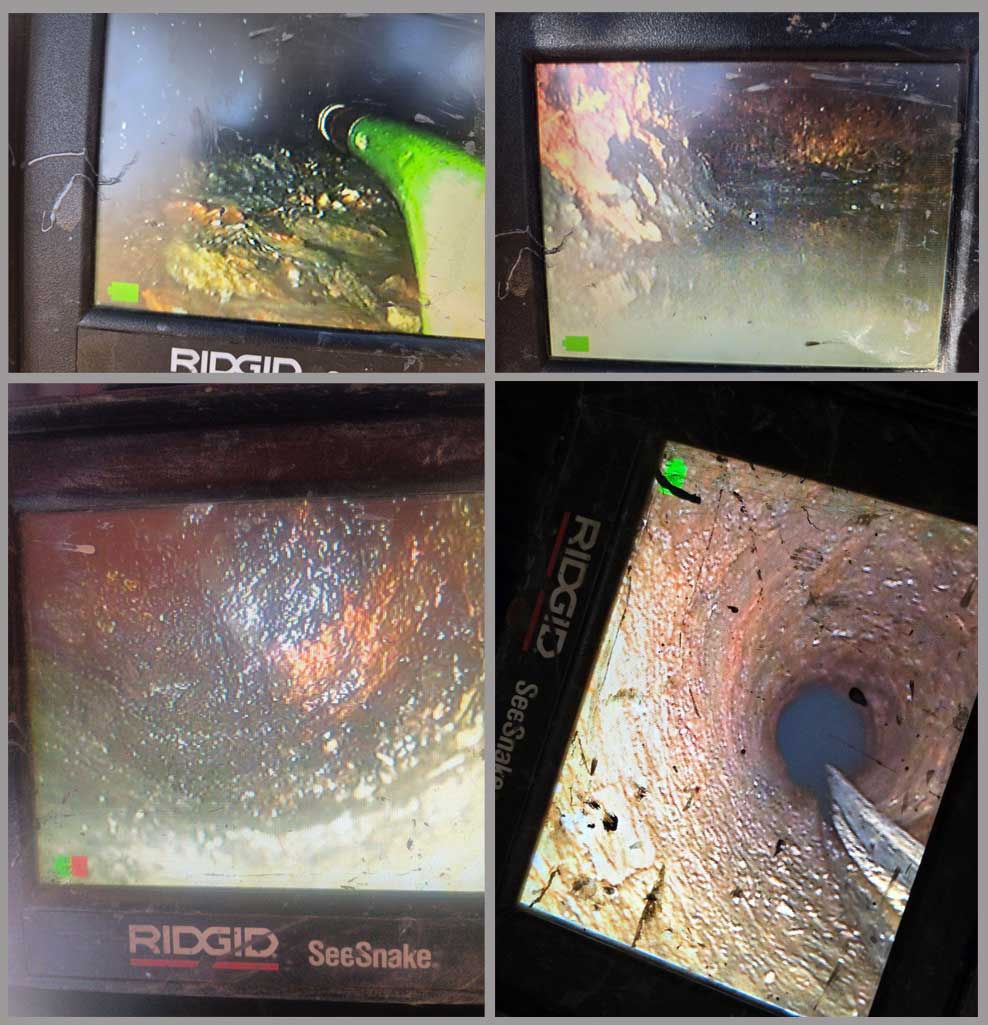
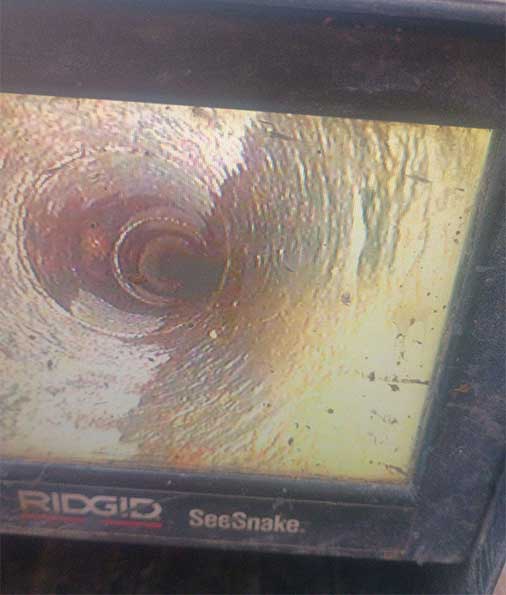
Camera inspection can help identify:
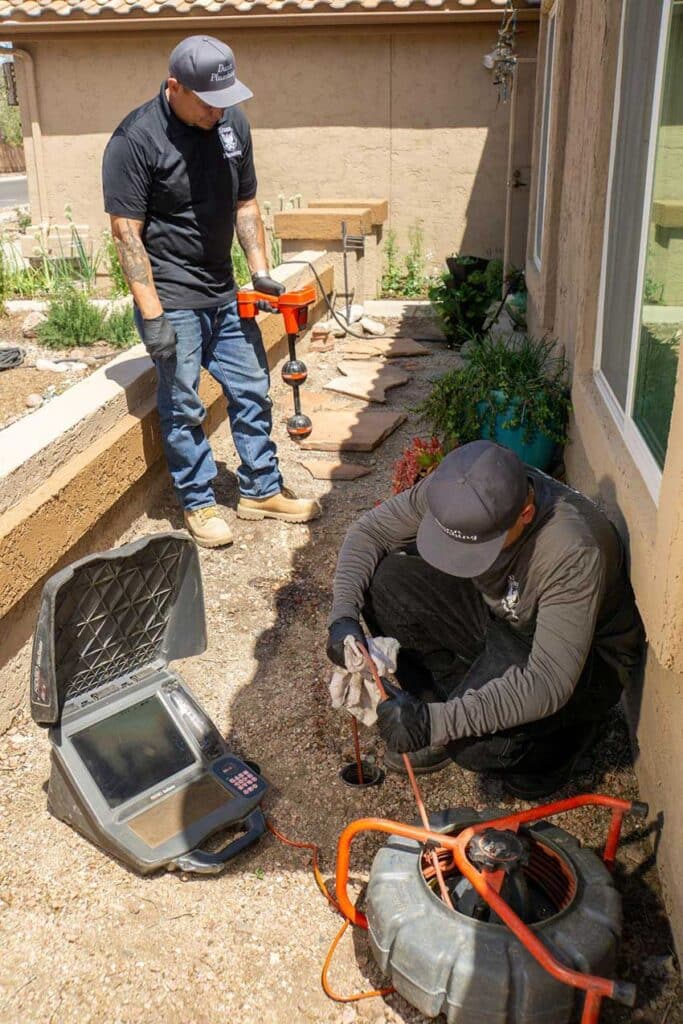
Brian says Dunn Plumbing uses cameras on drain calls when possible because:
“We need to have eyes on to see what is actually going on and not guess.”
Cory similarly wants the camera used once water levels permit so the team can determine whether the clog is truly gone.
This is particularly important before aggressive cleaning of an older or questionable line.
You should know what you are cleaning.
Can Hydro Jetting Damage Old Pipes?
This is an important question.
Hydro jetting is powerful equipment.
Professional plumbers should consider pipe condition before deciding how aggressively—or whether—to jet the line.
Older piping may have:
If the pipe has already failed structurally, cleaning does not repair it.
Brian says excavation becomes necessary when a pipe has collapsed or deteriorated to the point that it cannot be rehabilitated through less-invasive methods.
Cory similarly identifies situations where equipment cannot pass through the drain as evidence that more significant repair may be necessary.
That is why:
Diagnose → choose equipment → clean
is safer than:
Big machine → maximum pressure → hope for the best.
What About Cast Iron?
Cast iron deserves special attention in Tucson.
Many older homes contain cast-iron drainage systems.
As the material ages, its interior can become rough and deteriorated.
That roughness catches waste and contributes to recurring clogs.
Hydro jetting may help clean appropriate cast-iron lines, but cleaning cannot replace pipe material that is structurally gone.
Depending on condition, options may include:
Cory is especially concerned about homeowners waiting until cast iron deteriorates beyond the point where less-invasive solutions remain possible.
Hydro Jetting vs. Snaking Comparison
|
Question |
Drain Snaking |
Hydro Jetting |
|---|---|---|
|
Opens ordinary clogs |
Excellent |
Yes |
|
Cleans pipe walls |
Limited |
Excellent |
|
Removes grease buildup |
May open pathway |
More thorough cleaning |
|
Hair blockage |
Often excellent |
Sometimes unnecessary |
|
Root intrusion |
Can cut roots |
May clean remaining root material depending on condition |
|
Foreign object |
Sometimes |
Not necessarily |
|
Structural pipe damage |
Cannot repair |
Cannot repair |
|
Initial cost |
Usually lower |
Usually higher |
|
Best for recurring buildup |
Sometimes |
Often |
|
Camera evaluation useful |
Yes |
Strongly recommended |
|
Appropriate for every drain |
No |
No |
The key takeaway:
A cable and a hydro jetter are not competitors. They are different tools that can even be used together.
Why Might a Plumber Cable Before Jetting?
Sometimes the pipe is completely full of water because nothing is draining.
You cannot see very much with a sewer camera when the lens is underwater or blocked by waste.
A cable may first be used to open enough of the obstruction to restore flow.
Once the water drops:
- Camera inspection can begin.
- The technician can evaluate the line.
- Hydro jetting may be recommended if substantial buildup remains.
- A second camera inspection can confirm the result.
Cory’s preferred sequence on appropriate drain calls reflects exactly this logic: restore access and then get eyes on the system rather than assuming the first opening solved everything.
Why Hydro Jetting Can Cost More
A hydro-jetting service involves more than feeding a cable through a drain.
It may involve:
That is why comparing the price of basic drain cabling with hydro jetting is not an apples-to-apples comparison.
They are different services.
The better question is:
“What result does my drain actually need?”
Is Hydro Jetting Worth the Money?
Brian’s answer from our interview:
“Yes, 100%.”
But there is context.
Brian values hydro jetting when a line actually needs thorough cleaning because of the quality of the result and the ability to provide stronger confidence in the cleaned line.
Cory says an appropriate jetting can restore much of the usable interior opening and allow the company to stand behind the cleaning more confidently.
That does not mean Brian recommends jetting a bathroom sink because someone dropped a toothpaste cap down it.
The value comes from matching the service to the condition.
When Hydro Jetting Will NOT Solve the Problem
Hydro jetting cleans.
It does not rebuild.
It will not fix:
This is where some homeowners understandably become frustrated.
They hoped for drain cleaning.
Now someone is discussing pipe repair.
That is exactly why Dunn Plumbing wants to show the homeowner what the camera sees.
A repair recommendation should follow evidence.
Real Job Spotlight: When Another Drain Cleaning Wouldn’t Help
A new commercial client contacted Dunn Plumbing because the drain system serving the storefront had clogged again.
This was not the first time.
It was the fourth.
At that point, simply clearing the drain one more time did not make sense to us. A drain that repeatedly backs up after several previous cleanings is usually telling you that something deeper is wrong.
Instead of beginning with another routine drain-clearing attempt, Dunn Plumbing recommended sending a camera through the line first.
The client had originally called asking about drain cleaning, but the camera inspection quickly changed the conversation.
The footage showed that the drain line had collapsed beneath a storage shed located behind the building.
That explained why the problem kept returning.
No amount of snaking, cabling, or hydro jetting could restore a section of pipe that had physically collapsed. Cleaning might have temporarily moved some material around, but it would not repair the structure of the drain.
The long-term solution required moving the storage shed, excavating the damaged area, and replacing the collapsed section of pipe.
This is exactly why Dunn Plumbing believes in diagnosing recurring drain problems before recommending another cleaning.
The customer called expecting to pay for the fifth drain clearing.
Instead, the camera showed that the real problem was not a dirty drain.
It was a broken one.
Sometimes the most important thing a plumber can tell you is that the service you called for is not the service you actually need.
What Can Homeowners Do to Reduce Grease Buildup?
The easiest grease clog to clean is the one that never enters the drain.
The EPA recommends keeping fats, oils, and grease out of drains because they can accumulate in piping and contribute to blockages.
At home:
Garbage disposals make food smaller.
They do not teleport it to another dimension.
Everything still has to travel through your plumbing.
What a Tucson Homeowner Said After Hydro Jetting
One of the best parts of hydro jetting is that homeowners do not have to take our word for what it accomplished.
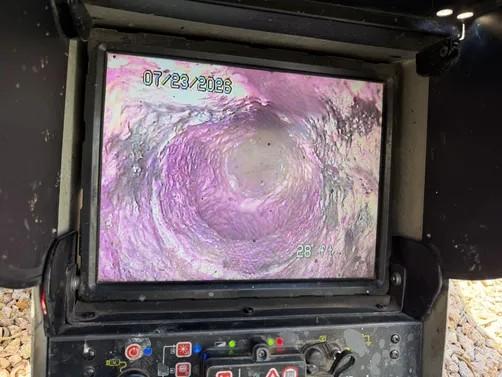
When camera inspection is used before and after the cleaning, they can often see the difference for themselves.
One Tucson homeowner had the opportunity to watch that transformation firsthand. Before the hydro jetting was completed, the drain line contained significant buildup and root intrusion. After the line was professionally cleaned, the camera was sent back through so the homeowner could see the results.
Their reaction said it all:
“Jetting, I can’t believe it gets all that stuff out of there—roots and everything.”
After seeing the cleaned pipe on camera, they added:
“It’s night and day how clean the pipes are.”
That “night and day” difference is exactly why Brian and Cory believe cameras are such an important part of professional drain cleaning.
Restoring flow tells us that water can move through the pipe again.
Seeing the pipe afterward helps us understand what was actually removed and what condition the drain is in now.
Hydro jetting is not appropriate for every clogged drain, but when a structurally suitable line is coated with grease, sludge, soap buildup, roots, or other accumulated material, it can provide a much more thorough cleaning than simply creating an opening through the blockage.
For this homeowner, the biggest surprise was not just that the drain worked again.
It was seeing how dramatically different the inside of the pipe looked after it had been cleaned.
Frequently Asked Questions
Brian Dunn’s Final Advice
Brian wants homeowners to understand that tools are only as useful as the diagnosis behind them.
A cable is valuable.
A hydro jetter is valuable.
A camera is valuable.
But equipment does not replace judgment.
The goal is not to use the biggest machine.
The goal is to select the right solution for the pipe in front of you.
Cory Harding’s Final Advice
Cory has spent decades seeing what grease, lint, wipes, and buildup can do inside drainage systems.
His recommendation is to maintain drains before they become emergency calls and use hydro jetting when the condition of the pipe calls for a true cleaning rather than another temporary opening.
Or, as Cory would say:
Be proactive instead of reactive.
The Dunn Plumbing Promise
At Dunn Plumbing & Drain Service LLC, we don’t believe every clogged drain needs hydro jetting.
Some need cabling.
Some need cleaning.
Some need repair.
And some need nothing more than a simple fixture-level solution.
Our responsibility is to investigate the problem, explain what we find, and recommend the option that makes sense for your plumbing system and budget.
Call Dunn Plumbing & Drain Service LLC: (520) 310-0551