12 Questions Every Tucson Homeowner Should Ask Before Approving Plumbing Work
By Brian Dunn, Owner | Dunn Plumbing & Drain Service LLC. Contributions from Cory Harding, Licensed Contractor & Plumbing Expert

When a pipe is leaking, a toilet will not flush, or water is coming through the ceiling, most homeowners are not thinking: “This would be an excellent time to carefully interview several plumbing contractors.”
They are thinking: “Please make the water stop.”
That urgency is understandable.
But whether you are dealing with an emergency or planning a larger repair, asking a few good questions before approving plumbing work can prevent misunderstandings, unnecessary repairs, and expensive surprises.
Brian Dunn and Cory Harding have spent decades working with homeowners and plumbing systems throughout Southern Arizona. They advise homeowners to never feel uncomfortable asking questions.
It is your home. It is your money.
And you should understand what is being recommended before making a decision. Cory puts it simply:
The goal is to give homeowners enough information to make an informed decision about their home.
That is also why Dunn Plumbing emphasizes customer education rather than simply repairing the immediate problem and leaving.
Here are the questions Brian and Cory believe homeowners should be asking.
Quick Answer: What Should I Ask a Plumber Before Hiring?
Before approving work, ask:
If a plumbing company can answer those questions clearly, you are already learning a great deal about how that company operates.
If reasonable questions consistently produce vague answers, pressure, or irritation, you are also learning something.
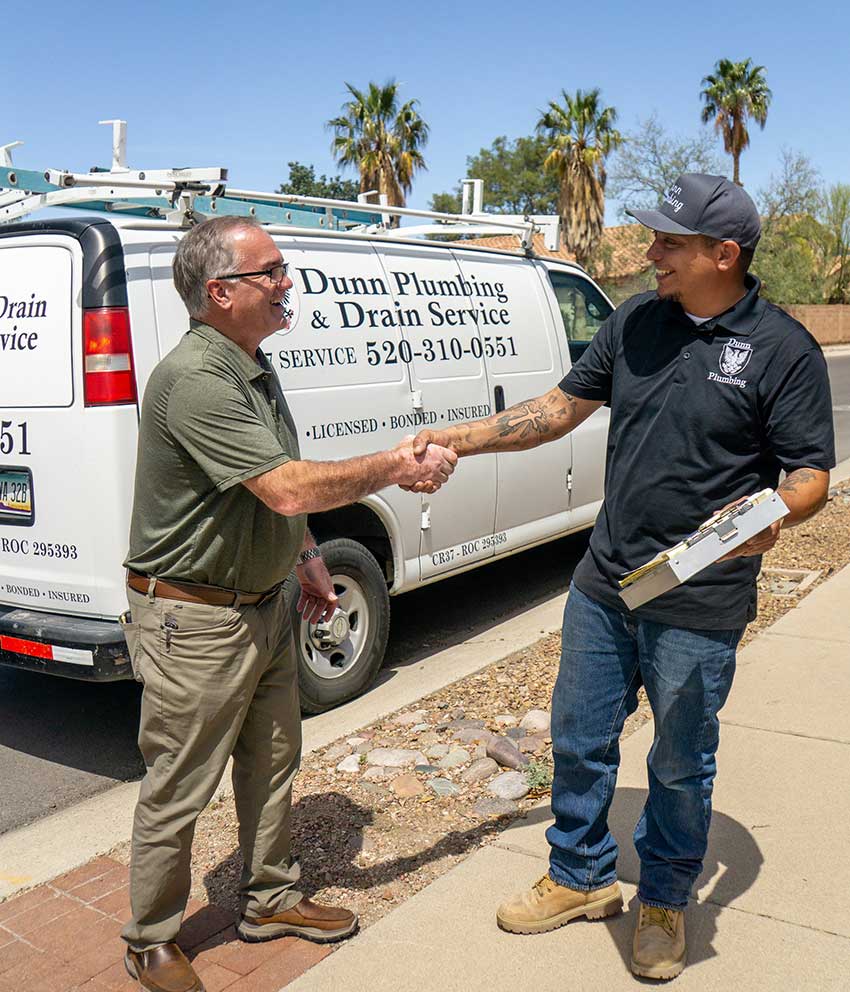
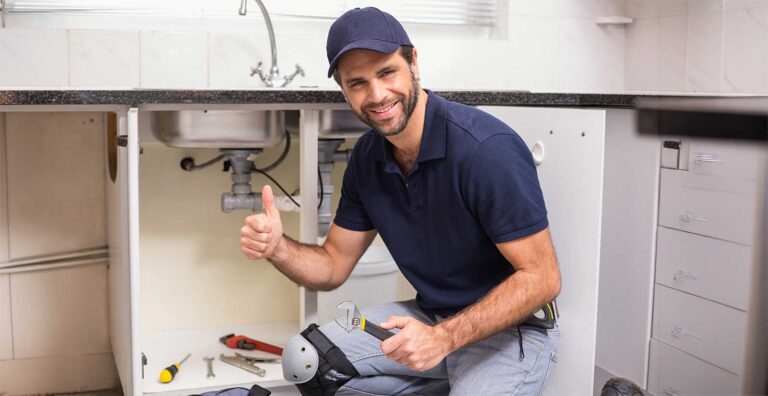
A homeowner should understand what a plumber found, what repair is being recommended, and why before approving the work.
1. Are You Properly Licensed for This Work?
This should be one of your first questions, especially for significant repairs. Arizona homeowners do not have to rely solely on what an advertisement says.
The Arizona Registrar of Contractors allows consumers to verify a contractor’s license and recommends confirming that the contractor’s license classification covers the work being proposed.
The ROC also recommends checking references and reviewing the contractor’s license record before hiring.
Dunn Plumbing & Drain Service LLC currently lists Arizona Plumbing License #295393 and identifies the company as licensed, bonded, and insured.
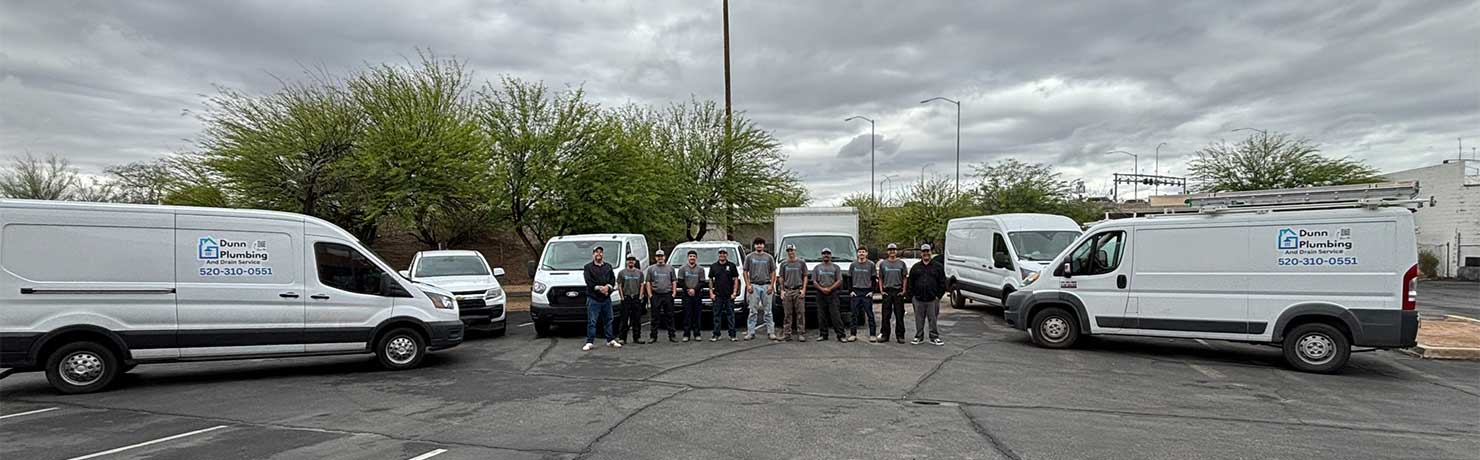
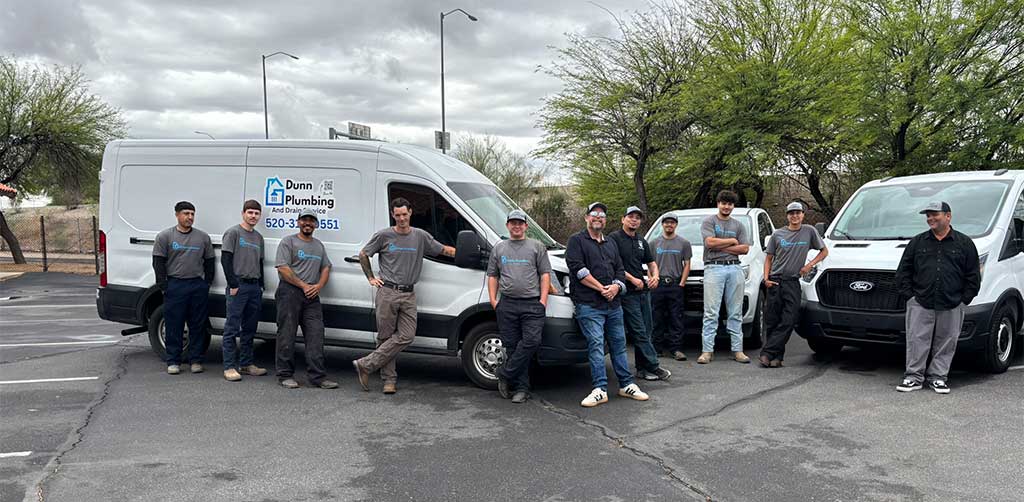
Meet Brian Dunn, Cory Harding, and the Dunn Plumbing team.
Brian’s Advice
Brian believes homeowners should verify credentials rather than simply assuming someone advertising plumbing services is qualified to perform every type of plumbing repair.
A small fixture repair and a major sewer, gas, or water-line project carry very different levels of responsibility.
2. Is There a Trip Fee, Service Fee, or Diagnostic Charge?
Ask this before scheduling.
Companies structure service calls differently. Some charge a dispatch fee.
Some charge a diagnostic fee.
Some apply that fee toward the repair.
Some advertise a low service price but add other charges later. There is nothing inherently wrong with charging a service fee. The important thing is that the homeowner knows what to expect.
Dunn Plumbing currently operates with no initial service or trip fee simply to evaluate the plumbing problem.
That means the homeowner can understand the issue and proposed work before deciding whether to move forward.
Good question to ask:
“What will I owe if the technician comes out and I decide not to proceed with the repair?”
That one sentence can prevent a great deal of confusion.
3. What Do You Believe Is Actually Causing the Problem?
This is one of Brian’s favorite questions.
There is a difference between:
What is happening?
and:
Why is it happening?
A toilet is clogged.
That’s what is happening. But why?
It could be:
A water heater is not producing enough hot water. Again, that is a symptom.
The cause could involve the heater itself, sediment, controls, installation, sizing, water quality, or another condition.
Brian says many clogged drains are not simply fixture clogs; the problem may exist deeper in the system. Cory similarly notes that recurring drain problems may be caused by bellies, root intrusion, deteriorated piping, separated clay pipe, collapsed lines, or foreign objects.
The best repair starts by asking the right question.
Brian Dunn’s Advice: Don’t Pay to Fix the Same Symptom Over and Over
Brian’s philosophy is:
Find out what is actually happening before throwing solutions at it.
That is why he strongly favors diagnostic tools such as cameras when they are appropriate. For drain calls, Brian’s position is especially clear:
“We need to have eyes on to see what is actually going on and not guess.”
Cory agrees. Once conditions allow, he wants the line inspected so the technician can determine whether the problem was truly resolved or merely opened temporarily.
That leads directly to the next question.
4. Can You Show Me What You Found?
Sometimes, yes.
Not every plumbing issue can be photographed or viewed with a camera. But many can.
A plumber may be able to show you:
A homeowner does not need to become a plumber.
But if you are being told that an expensive repair is necessary, it is reasonable to ask:
“Can you show me why?”
Brian likes photos and camera inspections because they reduce uncertainty.
You and the plumber can look at the same problem.
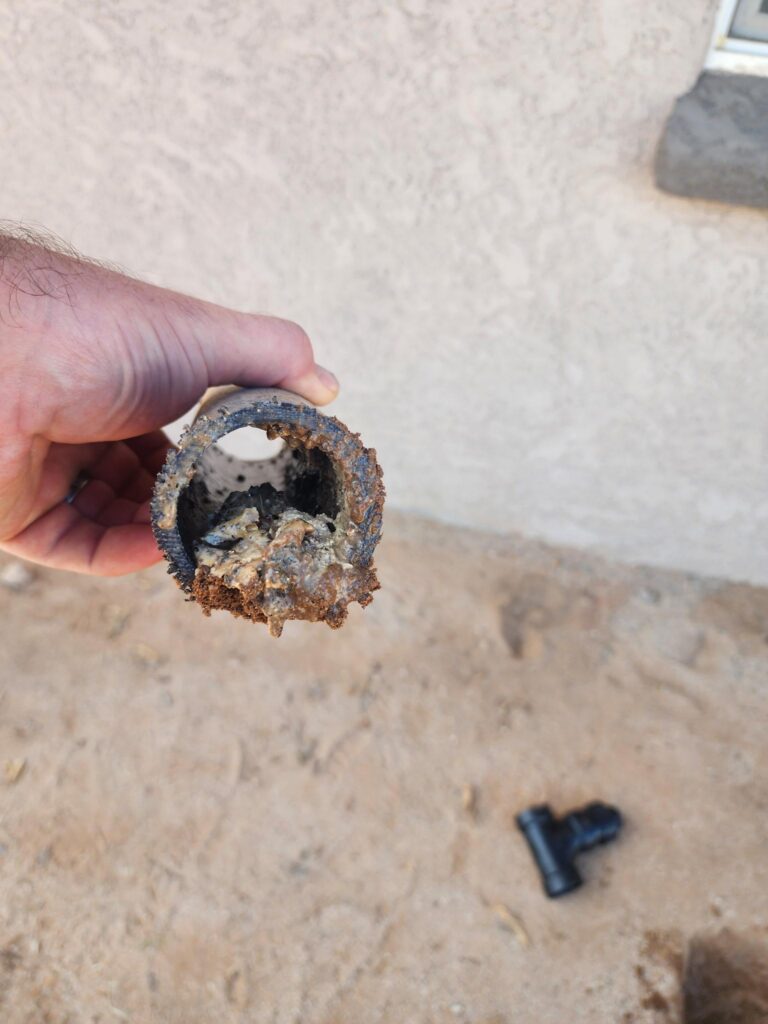
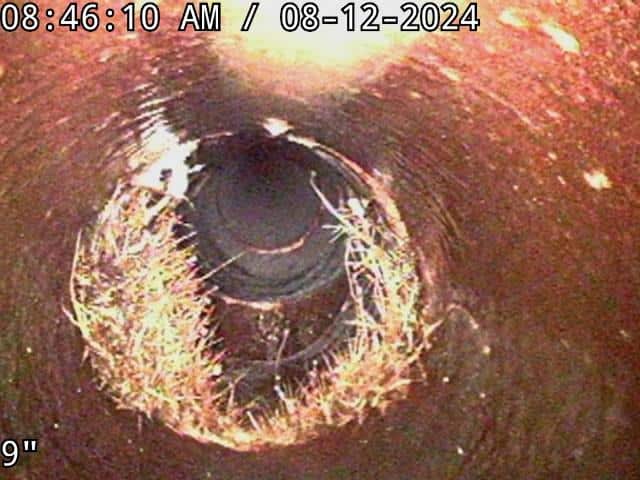
Photos and camera inspections can help homeowners understand why a repair is being recommended.
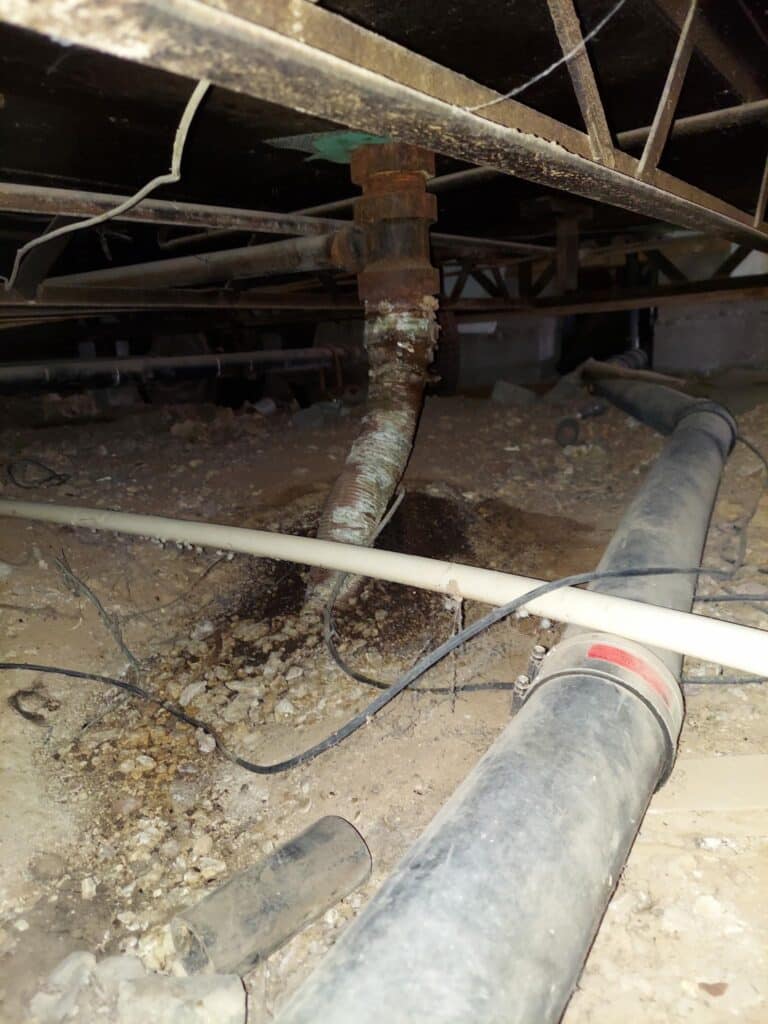
REAL JOB SPOTLIGHT:
Three Clog Clearings, One Collapsed Pipe
A downtown Tucson homeowner had already called several plumbing companies about the same toilet clog. Each visit restored drainage,and the clog continued returning.
When Dunn Plumbing arrived, the team cleared the immediate blockage on an emergency 24 hour call and then came back for a camera inspection of the full drain line, rather than stopping once the toilet flushed.The camera revealed a small collapsed section of drain pipe.
That was the reason the problem kept returning. The damaged section was repaired, and the homeowner finally had an answer to a much more valuable question than:
“Can you unclog my toilet?”
The important question was:
“Why does my toilet keep clogging?”
That is the difference between treating a symptom and diagnosing a system.
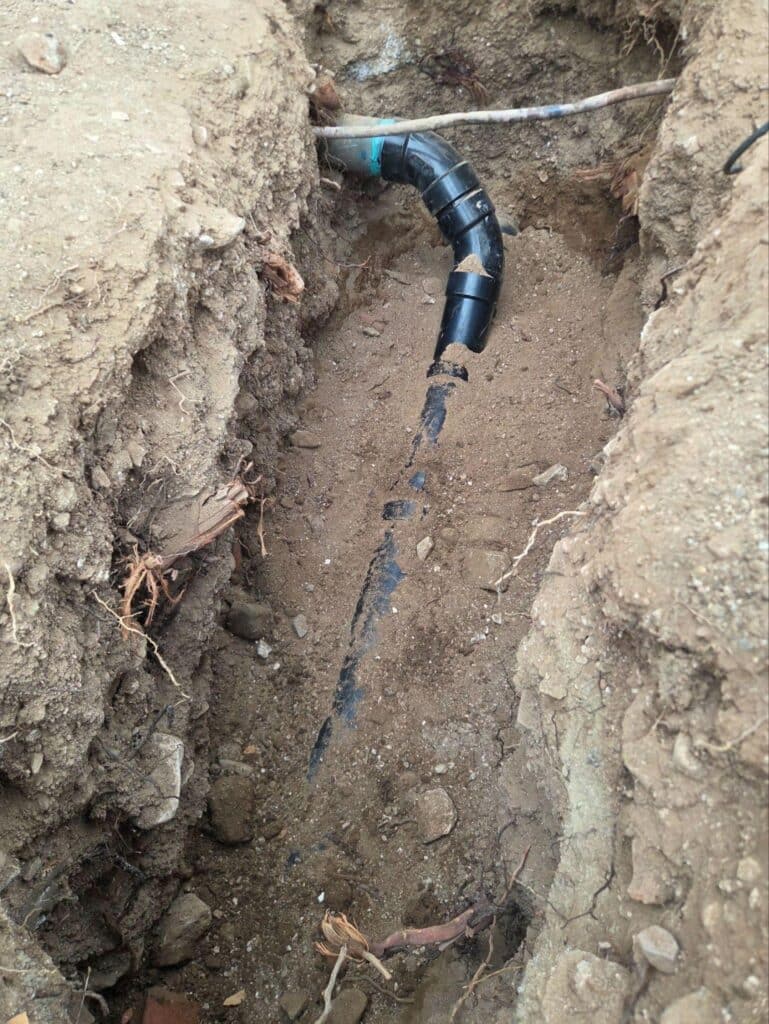
After a camera inspection, we traced a recurring toilet clog to a collapsed section of the drain line, then carefully dug it up and replaced it.
5. What Exactly Is Included in This Price?
This is important on both small and large projects. Ask what the estimate includes.
For example:
Does a sewer repair include:
Does a water heater replacement include:
You do not need to know which items should be included.
You simply want to know which items are included in the price you are approving.
The Arizona Registrar of Contractors specifically recommends that consumers have the project’s detailed scope, price, permit responsibility, and other relevant terms spelled out in writing.
Arizona ROC recommendations before hiring a contractor.
6. Are There Other Ways to Fix It?
This can be one of the most financially important questions you ask. Many plumbing problems have more than one possible solution.
For example, a damaged drain line might potentially involve:
The correct choice depends on the pipe’s condition and the homeowner’s circumstances.
The goal should not be to automatically choose the most expensive solution. Nor should it automatically be to choose the cheapest.
It should be to understand:
What are my reasonable options? What does each option accomplish? What are the limitations?
Which gives me the best long-term value?
Cory says Dunn Plumbing focuses on long-term solutions, while Brian emphasizes helping homeowners protect what is often one of their largest investments.
Cory’s Corner: The Right Repair Depends on the Pipe
Cory has worked with many generations of Southern Arizona plumbing.
That experience matters because a solution appropriate for PVC may not be appropriate for deteriorated cast iron.
A repair suitable for an accessible pipe may be very different from one buried beneath concrete.
Cory is particularly concerned about waiting too long on badly deteriorating cast iron because once the pipe loses enough structural integrity, homeowners may lose less invasive repair options.
His preference is to identify trouble before the homeowner is forced into jackhammering, excavation, or major replacement.
So ask:
“If we do nothing right now, what is likely to happen?”
And also:
“Are there less invasive options available while the pipe is still repairable?”
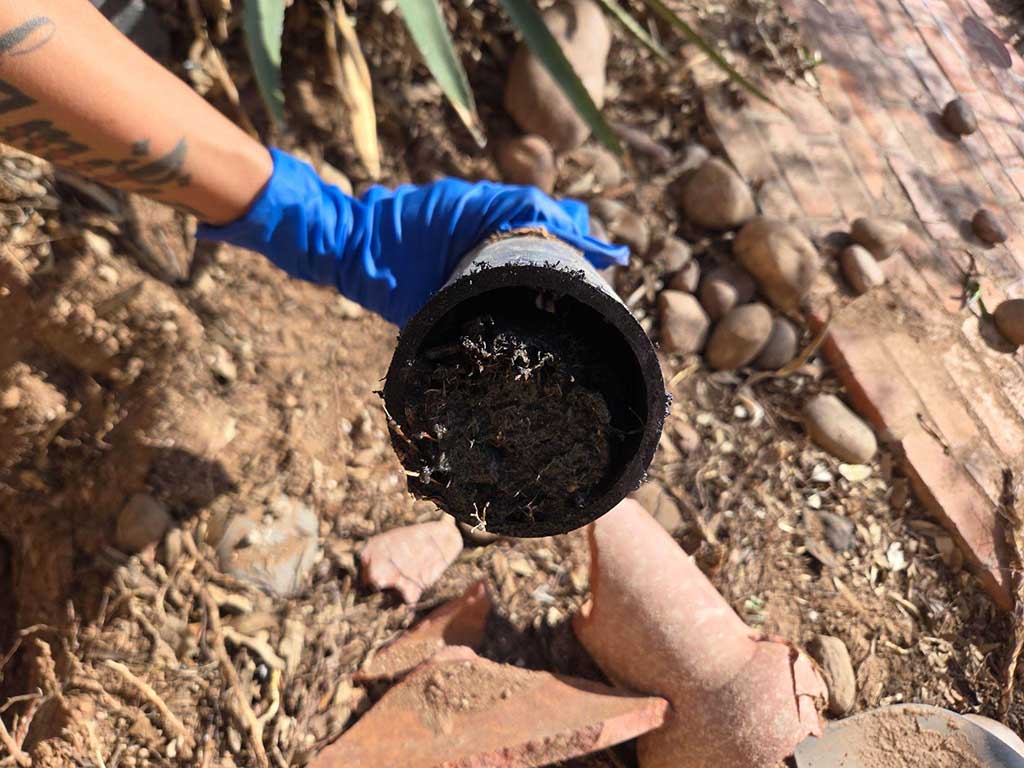
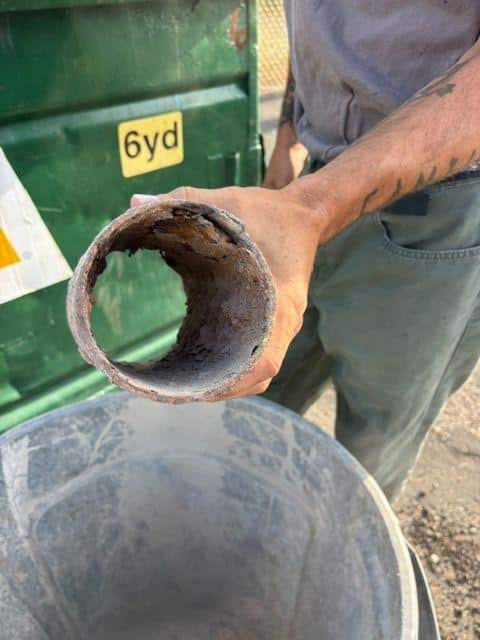
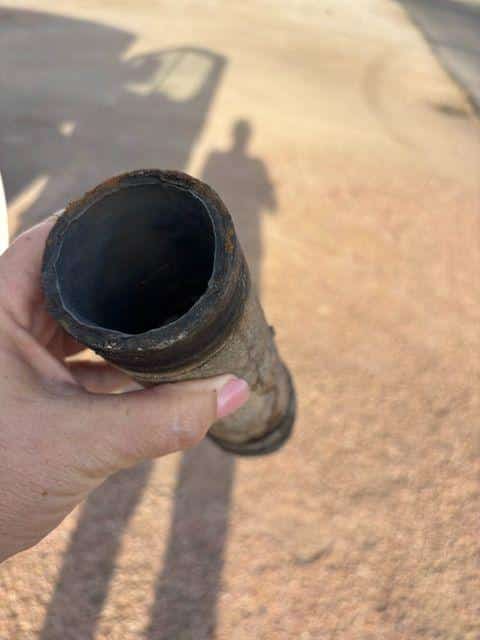
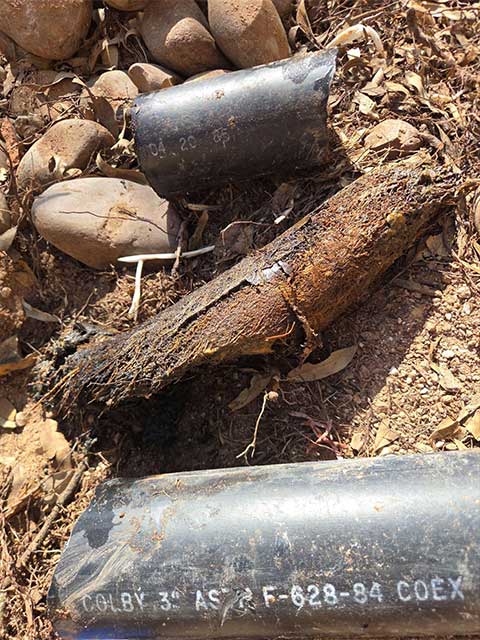
Some damaged drain lines may have more than one repair option depending on the condition and location of the pipe.
7. Will I Know the Price Before Work Begins?
Homeowners should understand the proposed cost before approving work.
With larger jobs, it is also important to understand what conditions might require a change in scope.
Ask:
“Is this the complete price for the work we are discussing?”
Then ask:
“What could cause that price to change?”
Unexpected conditions do happen in plumbing.
A wall can be opened and reveal additional damage.
A buried line can be exposed and prove to be in worse condition than expected. The problem is not that every surprise can be predicted.
The issue is how those surprises are communicated.
The Arizona ROC advises consumers to understand change orders and how changes affect both project cost and completion.
A good contractor should stop, explain the new condition, and discuss the revised work before proceeding whenever circumstances allow.
8. Does This Work Require a Permit?
Never be embarrassed to ask this.
Not every plumbing repair requires a permit. Some do.
The City of Tucson currently states that permits and inspections are required for many residential projects and specifically lists work such as water-heater installations and certain gas-line work. Replacement gas piping may require plans as part of the permit process.
Ask:
“Does this repair require a permit?”
Then:
“Who is obtaining it?”
The Arizona ROC also recommends that permit responsibility be clearly addressed in the contract or estimate.
City of Tucson residential plumbing permit information.
Brian’s Advice
Brian says plumbing work that requires permitting makes him particularly uncomfortable as a DIY project.
There is a reason certain work requires professional review and inspection.
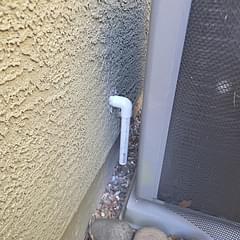
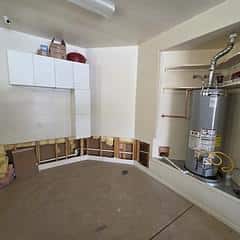
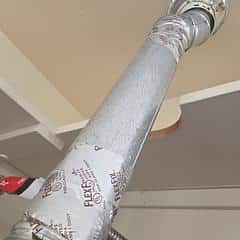
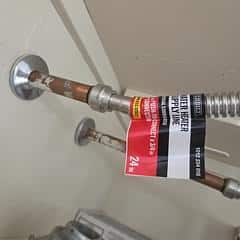
Real Job Spotlight: When a “Helpful” Water Heater Installation Became a Safety Concern
A landlord contacted Dunn Plumbing after a water heater failed at one of his rental properties and caused significant water damage. Because the owner was out of town, his insurance company brought in a restoration company to handle the water-damage portion of the claim.
Dunn Plumbing was called to complete the water heater replacement because this type of work requires a licensed plumber and proper permitting.
Before our team could coordinate the installation, the restoration company decided to install the water heater themselves, believing they were helping the homeowner save time and money. The problem was that the company was not licensed to perform the plumbing work.
When Dunn Plumbing followed up, the tenant explained that the restoration company had already installed the unit and that our services were no longer needed.
That raised immediate concerns.
No plumbing permit had been pulled, and there was no assurance that the installation met current safety and code requirements. Because this was a rental property, the owner also had a responsibility to provide a safe plumbing system for the tenants.
Dunn Plumbing explained the concerns to the owner and recommended that the installation be professionally inspected.
Once we evaluated the work, we identified multiple installation issues, including concerns with venting and other safety requirements. An improperly installed gas water heater can create serious risks for the people living in the home.
The owner authorized Dunn Plumbing to correct the installation.
Our team removed and redid the work properly, obtained the required permit, and completed the installation to code. The project then passed inspection.
The lesson is simple:
Someone being willing to install a water heater does not mean they are legally or technically qualified to do it.
For landlords especially, verifying licensing, permitting, and inspection requirements is not just paperwork—it is part of protecting the property and the people living in it.
Not Compliant for permitting
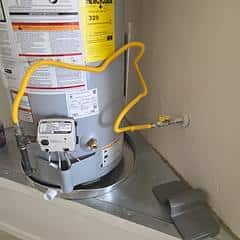
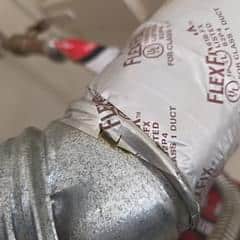
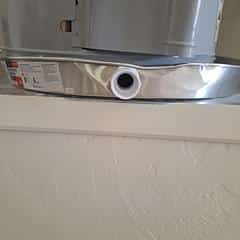
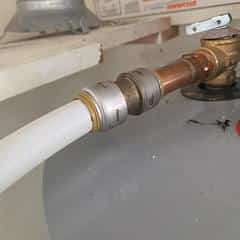
Compliance for Permitting.
9. What Warranty Comes With the Work?
Do not assume. Ask.
Different repairs may have different warranties. Questions to ask:
Also ask the bigger question:
Will this company still be here if I need them?
Warranty paperwork is useful.
A company that answers the phone is better.
What Standing Behind the Work Looks Like
Great price, strong warranty
DUNN completed an entire repiping and hydrojetting, it was a 3 day job, the techs Mario, KC, Daniel, Damien and Bobby were great, very respectful and were able to answer all my questions. DUNN went above and beyond to make me feel comfortable and did Lil extra small work for me also without charge.
10. What Happens If the Problem Comes Back?
This question is especially useful with drain cleaning. Suppose the drain is cleared.
Then two weeks later, it stops again. Was the original service guaranteed?
Should the line be camera inspected? Is there a deeper problem?
Would the next diagnostic step be different?
Cory sees fats, oils, grease, and bathroom wipes contributing to recurring drain problems regularly. Brian identifies roots and flushable wipes among major Tucson clog causes.
A trustworthy plumber should be willing to explain:
“Here is what we did today, here is what we found, and here is what I would recommend if the problem returns.”
That makes the homeowner part of the plan.
Real Job Spotlight:
Slow Bathroom and Laundry Drains
A homeowner called Dunn Plumbing because the bathroom and laundry drains were both moving slowly. The customer understandably believed there were probably blockages near those two locations. But the fixtures were only showing the symptoms.
Inspection showed that the drain system had become coated internally with fats, oils, grease, soap residue, and other buildup. They bread dogs and much of the laundry had extra pet hair and oils. Instead of treating the bathroom and laundry as unrelated fixture clogs, the team addressed the drain system itself.
The affected lines were hydro jetted, using high-pressure water and specialized equipment to remove the accumulated material from the inside of suitable piping. Once the buildup was cleaned from the drain lines, normal drainage was restored. The customer called because of two slow drains. The underlying problem was a dirty drainage system. That is why one of the best questions a homeowner can ask is:
“Are we fixing the symptom, or are we fixing the cause?”
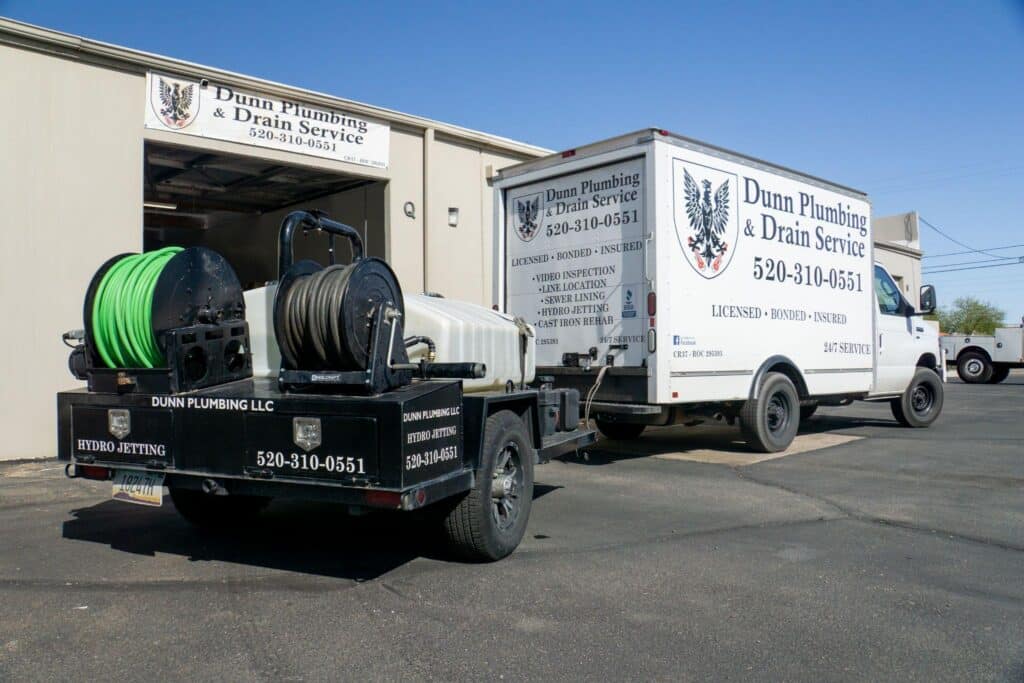
A hydro jetting machine has hoses and a tank with special nozzles that can clean the inside of drain pipes that have too much building up. Different size pipes require different heads and hoses to make sure there is no damage.
11. Who Is Actually Going to Perform the Work?
When comparing estimates, homeowners often focus on the company. Also think about the technician.
Ask:
Brian says Dunn Plumbing continuously trains its staff not only on plumbing but also on communication and customer care. He says he is particularly proud that the team tries to “do what we say and say what we do.”
Cory says customers frequently compliment the company for being quick, friendly, and knowledgeable across water, drain, and gas plumbing.
Technical ability matters.
So does how someone behaves in your home.
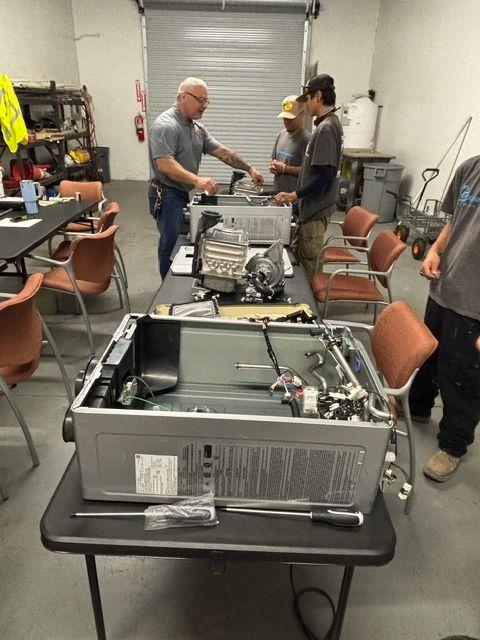
Ongoing technical training helps plumbers stay current on equipment, repair methods, safety, and plumbing requirements. This is Tankless water heater training from July.
12. Who Do I Call If I Have Questions Later?
This may be the most overlooked question on the entire list. The plumber leaves.
Three days later, you think of something you forgot to ask. Who answers?
Can you call the office?
Can you reach someone familiar with the job? Will anyone explain the invoice?
What if you notice something unusual?
Brian’s answer to Dunn Plumbing customers is:
“I’m never too busy for their call.”
He wants customers to contact the company when they have questions and believes scheduled maintenance and communication can prevent larger plumbing problems from sneaking up on homeowners.
That is an important mindset.
Plumbing does not end when the technician backs the truck out of the driveway. A reliable plumbing company should want the relationship to continue.
Sometimes the Best Plumbing Advice Doesn’t Result in a Service Call
One of my favorite things from Brian and Cory’s interviews belongs in this article.
Not every plumbing question needs a truck in the driveway.
Over the years, Brian Dunn has talked many homeowners through simple plumbing questions over the phone when a service visit was not necessary.
Sometimes the question is as basic as: “Where is my main water shutoff?”
Other times, a homeowner is in the middle of a small repair and gets stuck on one frustrating step.
“I’m installing this part and one piece just won’t come off.”
Brian may be able to recognize the problem from the homeowner’s description and offer a simple suggestion:
“Try turning that piece counterclockwise.”
Or:
“You’ll need a cartridge puller for that. Once you have the right tool, you should be able to finish it.”
And sometimes that is all the homeowner needs.
Cory Harding has done the same thing—answering questions, helping homeowners understand what they are looking at, and occasionally saving them from scheduling a service call they may not need.
That matters because the real question most homeowners are asking is not:
“How can I spend money with a plumber today?”
It is:
“How do I take care of my home?” Sometimes the answer is a professional repair. Sometimes it is preventive maintenance.
Sometimes it is shutting off the water quickly before a small leak becomes a major problem.
And sometimes it is simply having an experienced plumber explain which direction a stubborn part turns or which specialty tool will make the job easier.
Brian believes that helping a customer does not always have to result in an invoice.
The goal is to build a relationship where homeowners feel comfortable calling with questions before a small plumbing concern becomes an expensive emergency.
That is the difference between viewing someone as today’s service call and viewing them as a customer you hope to take care of for years.
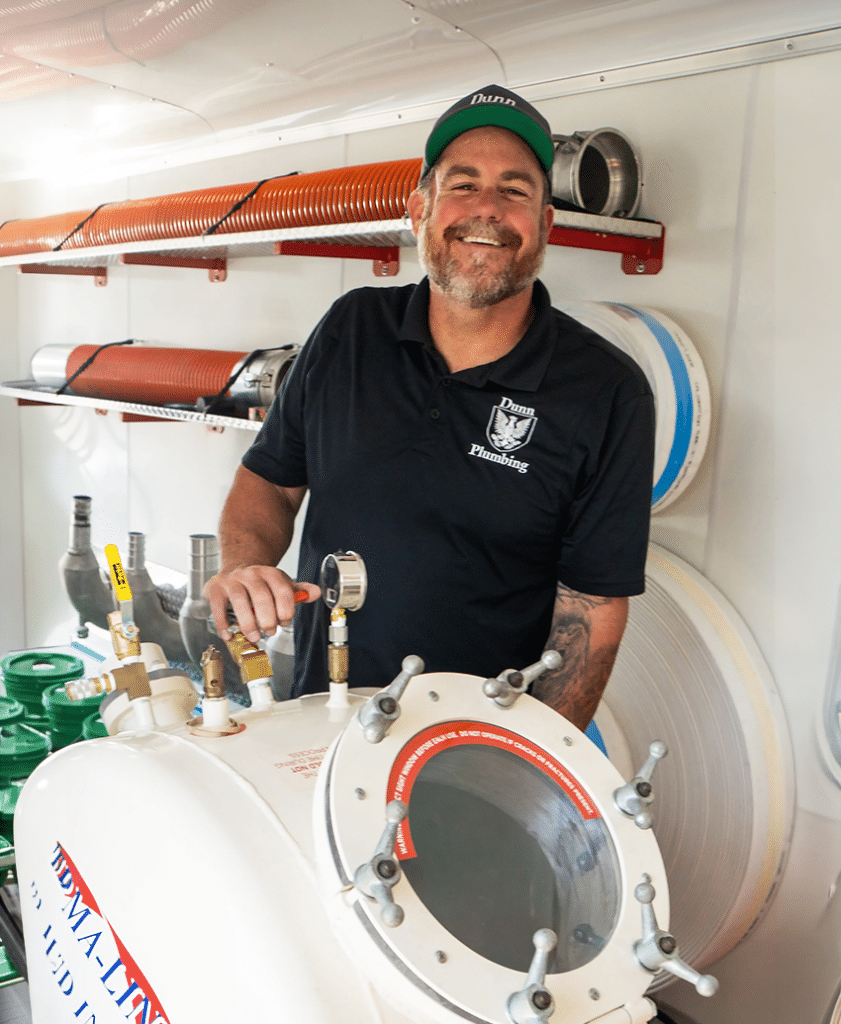
Sometimes great plumbing service starts with answering a homeowner’s question—even when the answer means they do not need to schedule a service call.
The 12-Question Plumber Checklist
Before approving a significant repair, save this list on your phone:
You do not need to ask these like you’re conducting a deposition. A normal conversation works just fine.
The point is to leave the conversation knowing what you are buying and why.
Red-Flag Answers
Be cautious when you hear things like:
“Don’t worry about the license.”
You should.
“You don’t need to see it.”
If the contractor can reasonably show evidence of an expensive problem, asking to see it is fair.
“Permits just make things expensive.”
Permit requirements exist independently of whether someone enjoys them.
“This price is only good if you sign right now.”
Real emergencies sometimes require quick decisions. Artificial pressure is different.
“That’s just how much it costs.”
A contractor may not break pricing down exactly the way you expect, but they should be able to explain what work they are proposing.
“There’s no other option.”
Sometimes that’s true.
If so, the plumber should be able to explain why.
Frequently Asked Questions
Cory Harding’s Final Advice
Cory believes proactive homeowners generally experience fewer unpleasant plumbing surprises.
His advice is:
“Be proactive instead of reactive. No one likes to come home to a flood after a hard day’s work.”
For older Tucson homes especially, he recommends periodic plumbing inspections because many expensive drain problems exist underground or behind finished surfaces where homeowners cannot see them.
Brian Dunn’s Final Advice
Brian wants homeowners to remember that plumbers should be partners in maintaining the property.
His philosophy is not simply:
Fix today’s leak.
It is:
Help the homeowner understand the system well enough to prevent tomorrow’s emergency when possible.
Brian says Dunn Plumbing focuses on straightforward communication, continued technician training, and taking care of the customer.
Ask questions.
A good plumber should welcome them.
The Dunn Plumbing Promise
At Dunn Plumbing & Drain Service LLC, we believe homeowners should understand what is happening before making decisions about their plumbing.
If there is a simple solution, we will explain it.
If there are multiple options, we will discuss them. If we can show you the problem, we will.
And when professional work is needed, our goal is to help you understand why.
Dunn Plumbing & Drain Service LLC is a Tucson-based plumbing company with more than 300 verified five-star reviews, 24/7 emergency support, and Arizona Plumbing License #295393.
Call Dunn Plumbing & Drain Service LLC: 520-310-0551. We offer plumbing services throughout Tucson and Southern Arizona.