A Tucson Homeowner’s Guide from Dunn Plumbing & Drain Service LLC
A slow or clogged drain presents homeowners with a familiar decision:
Should I try to fix this myself, or is it time to call a plumber?
Some drain problems really are simple. A bathroom sink stopper may be wrapped in hair, a kitchen strainer may need cleaning, or a toilet may respond to the proper use of a plunger.
Other clogs only look simple.
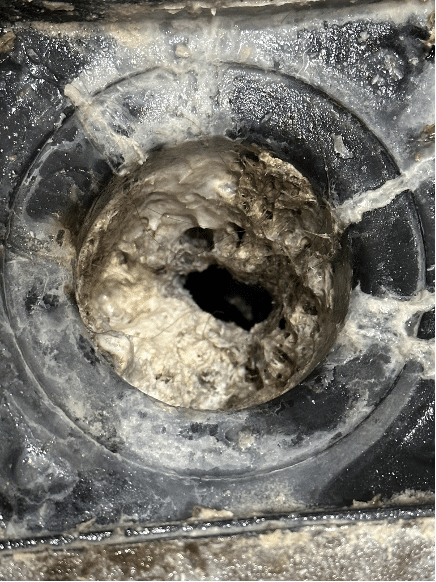
The blockage may be caused by grease buildup, intrusive tree roots, a separated pipe joint, deteriorating cast iron, a low spot in the drain line, or even a collapsed pipe. In those situations, repeatedly forcing a cable through the drain or pouring chemicals into it may create additional hazards without correcting the underlying problem.
At Dunn Plumbing & Drain Service LLC, Brian Dunn and Cory Harding have spent decades helping Tucson-area homeowners distinguish between a safe do-it-yourself project and a problem that needs professional equipment and experience.
Their advice is straightforward:
Try the safe, simple steps first, but know when to stop.
“Awesome to have worked with super good, courteous, friendly, polite 👍”
Vince A.
Thank you, Vince!
The Quick Answer
You can usually try a simple DIY solution when:
Call a licensed plumber when:
The simplest rule is this:
If the solution requires more force, more chemicals, or more guessing, it is probably time to call a professional.
Before You Spend Any Money
Try these basic checks first.
For a bathroom sink
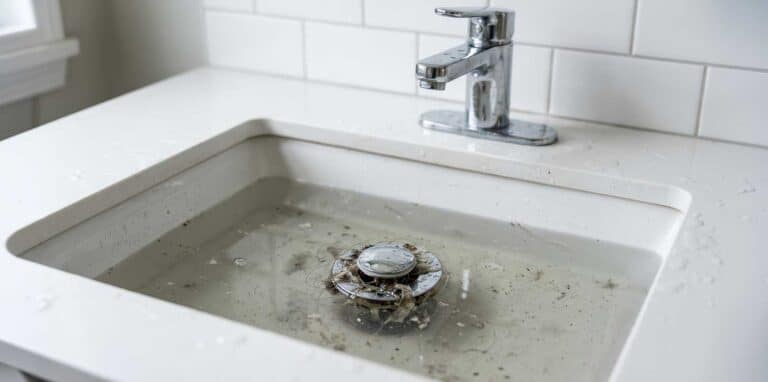
Remove and clean the stopper if it is designed to come out easily. Hair, toothpaste, soap residue, and personal-care products often collect directly beneath it.
Place a towel under the sink before starting. Plumbing has an unusual talent for producing one cup more water than the towel you selected can hold.
For a kitchen sink
Remove standing water if possible, then clean the strainer. Look for food particles or grease near the opening.
Do not reach into a garbage disposal. Turn off its power before inspecting the area, and never place your hand inside the grinding chamber.
For a shower or tub
Remove visible hair from the drain cover. A small plastic drain-cleaning tool may help with material located immediately beneath the opening.
For a toilet
Use a toilet plunger with a flange, not a flat sink plunger. Make sure there is enough water in the bowl to cover the rubber portion of the plunger, create a seal, and use controlled pressure.
Repeatedly flushing an already clogged toilet is not a repair strategy. It is more accurately described as conducting a flood experiment.
Homeowners often tell us that seeing the problem and understanding their options made the repair much less stressful.
“DUNN completed an entire repiping and hydrojetting, it was a 3 day job, the techs Mario, KC, Daniel, Damien and Bobby were great, very respectful and were able to answer all my questions. DUNN went above and beyond to make me feel comfortable and did Lil extra small work for me also without charge.”
JULIE J.
Thank you, Julie!
Brian Dunn’s Advice: A Clog Is Not Always “Just a Clog”
Brian says one of the biggest mistakes homeowners make is assuming the obstruction is located directly beneath the affected fixture.
After more than 25 years of plumbing experience, he has learned that many recurring clogs begin farther inside the drain system. A backed-up toilet, for example, may be the first visible symptom of a root intrusion, separated pipe, deteriorated drain line, or structural failure.
Brian estimates that more than half of the drain problems he encounters could have been prevented or addressed earlier through proper maintenance and timely investigation. In Tucson, two of the most frequent contributors he sees are so-called flushable wipes and tree roots.
That does not mean every slow sink needs an excavation crew.
It means that when a clog returns, affects multiple fixtures, or does not respond to a safe first attempt, continuing to treat the symptom can be more expensive than identifying the cause.
Cory’s Corner: The Tool Must Fit the Drain
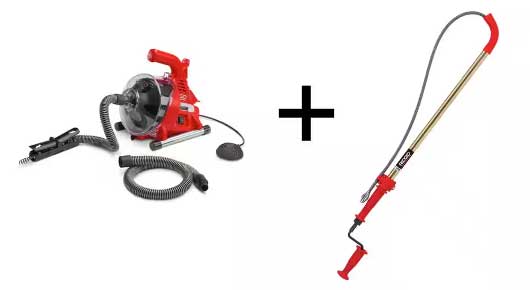
Cory Harding says one of the most common DIY mistakes is using the wrong tool, or a tool that is too small for the drain being cleared.
A typical home contains several sizes and types of drain piping. The appropriate cable for a bathroom sink is not necessarily suitable for a kitchen branch line, toilet, laundry drain, or main sewer.
Professional drain technicians carry multiple machines because cables vary in:
As Cory puts it, “The bigger the drain, the bigger and stronger the cable.” Brian adds that different problems require different treatments, and selecting the right equipment may protect the pipe and cost the homeowner less over time.
A professional drain truck may look like it contains an excessive number of cables and attachments. That is because plumbers do not believe in “one size fits all.”
What DIY Drain Cleaning Is Usually Safe?
1. Cleaning a removable stopper or strainer
This is often the safest place to begin. If the blockage is visible and easily accessible, removing it may restore normal drainage.
2. Using the correct plunger
A plunger can be appropriate for some sink and toilet clogs. Use the correct design for the fixture and stop if excessive pressure is required.
3. Using a small hand-operated drain snake
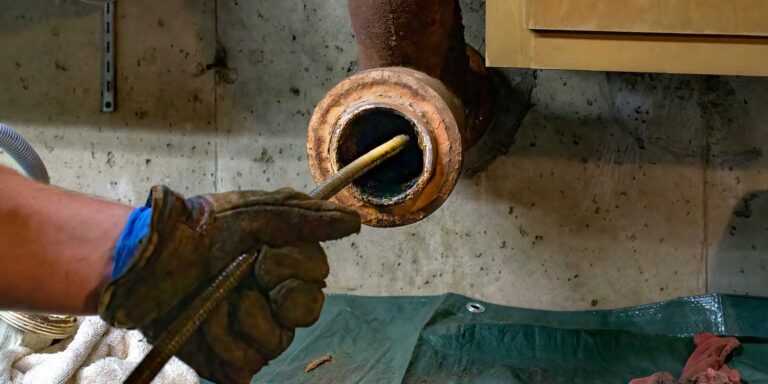
Both Brian and Cory consider a properly sized, nonpowered hand snake a reasonable homeowner tool.
Because it does not have a motor behind it, it carries less risk than a powered cable machine. However, it must still be used carefully and only in an appropriate drain.
Stop when:
Brian’s recommendation is firm: once the job requires a powered drain machine, it should become a professional service call. Cory agrees that homeowners should not continue forcing a cable when it cannot pass the obstruction.
Should You Use Chemical Drain Cleaners?
Brian and Cory’s answer is simple:
They do not recommend harsh chemical drain cleaners.
Many chemical drain openers contain highly corrosive acidic or alkaline ingredients. Poison Control warns that these products can cause serious burns and permanent tissue injury, particularly when they splash onto the eyes or skin.
The Environmental Protection Agency identifies drain openers as household hazardous waste and suggests using a plunger or plumber’s snake as an alternative when appropriate. The EPA also cautions homeowners not to mix household chemicals because incompatible products can react or create toxic fumes.
Why chemicals create trouble for the plumber
The clog may still be present when the plumber arrives—but now the drain may also contain a corrosive chemical.
That affects how the technician must approach the work. Additional protective equipment and flushing may be required, and a cable rotating inside the line can bring contaminated liquid back toward the technician.
Brian learned this firsthand.
He once began cabling a drain without knowing that the homeowner had already poured chemical cleaner into it. The chemical splashed back into his eyes and caused a serious injury. Cory says protective gloves, eye protection, and honest warnings from homeowners have helped protect him from similar surprises.
Always tell the plumber what you poured into the drain, how much you used, and approximately when you used it.
That information is not embarrassing. It is a safety warning.
Why chemicals may not solve the real problem
Chemical drain cleaner cannot repair:

Cory’s opinion is that chemicals fail because they do not correct the conditions that cause many recurring clogs. Brian adds that the chemical can turn one problem into two: the original obstruction plus hazardous material remaining in the line.
Always tell your plumber if a chemical drain opener has been used. That information helps protect the technician.
Explore the EPA’s household hazardous waste guidance for safer handling and alternatives to drain openers.
Real Job Spotlight: The Drain Snake “Monster”
Every experienced plumber has at least one story that sounds made up.
Brian’s story involves a powered drain cable, a shower curtain, a damaged bathroom, a frightened child, and a homeowner racing the clock before his wife returned home.
The homeowner rented a motorized drain snake and began feeding it through an exterior cleanout. He did not realize that the cable had traveled through the drain system and entered the house through a toilet connection.
The cable came out inside the bathroom, caught the shower curtain, damaged the vanity, and continued into the hallway.
The homeowner’s child came running from the house, announcing that a monster had nearly gotten him.
Technically, it was a drain cable—but from the child’s perspective, “monster” was a fair diagnosis.
The homeowner called Dunn Plumbing and asked whether everything could be repaired before his wife came home. The team handled the plumbing and property damage, but the experience illustrates why powered drain equipment should not be treated like an oversized hand tool.
Powered cables can twist, bind, reverse direction, leave the pipe, damage fixtures, or cause serious bodily injury.
Cory has seen a DIY user suffer broken fingers while operating the wrong cable. Brian has seen incorrect cable use break a sewer line badly enough to require excavation and pipe replacement.
Real Job Spotlight: When a Simple Clog Was a Wrench
A recurring drain clog at a Tucson-area auto shop initially appeared to be an ordinary blockage.
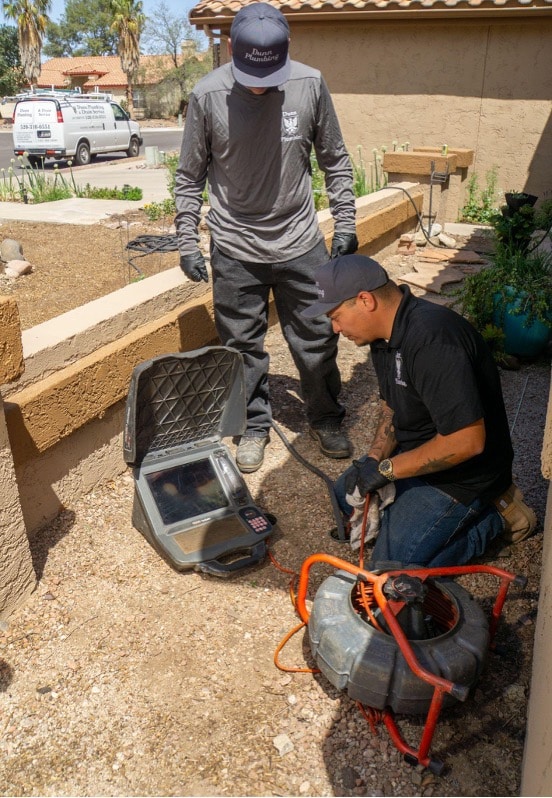
After clearing the line, the Dunn Plumbing team used a camera to investigate why the problem kept returning.
The camera revealed a wrench inside the drain.
How the wrench entered the pipe remains a mystery. Perhaps it fell in accidentally. Perhaps the wrench and the auto shop had reached the end of their working relationship.
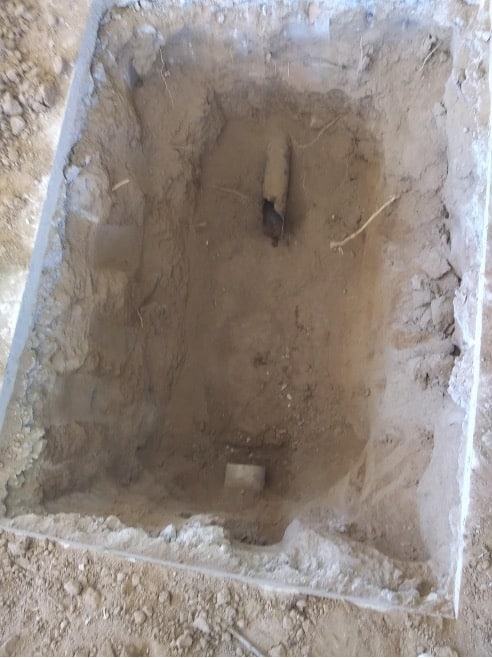
Either way, the tool was too large and heavy to retrieve through ordinary drain cleaning. The line had to be excavated so the obstruction could be removed properly.
This is one reason professional diagnosis matters. Without a camera, the technician could continue cabling the line without knowing what was stopping the equipment—or what damage additional force might cause.
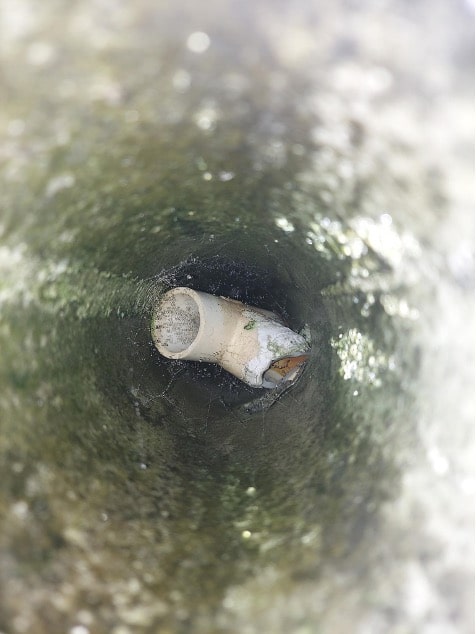
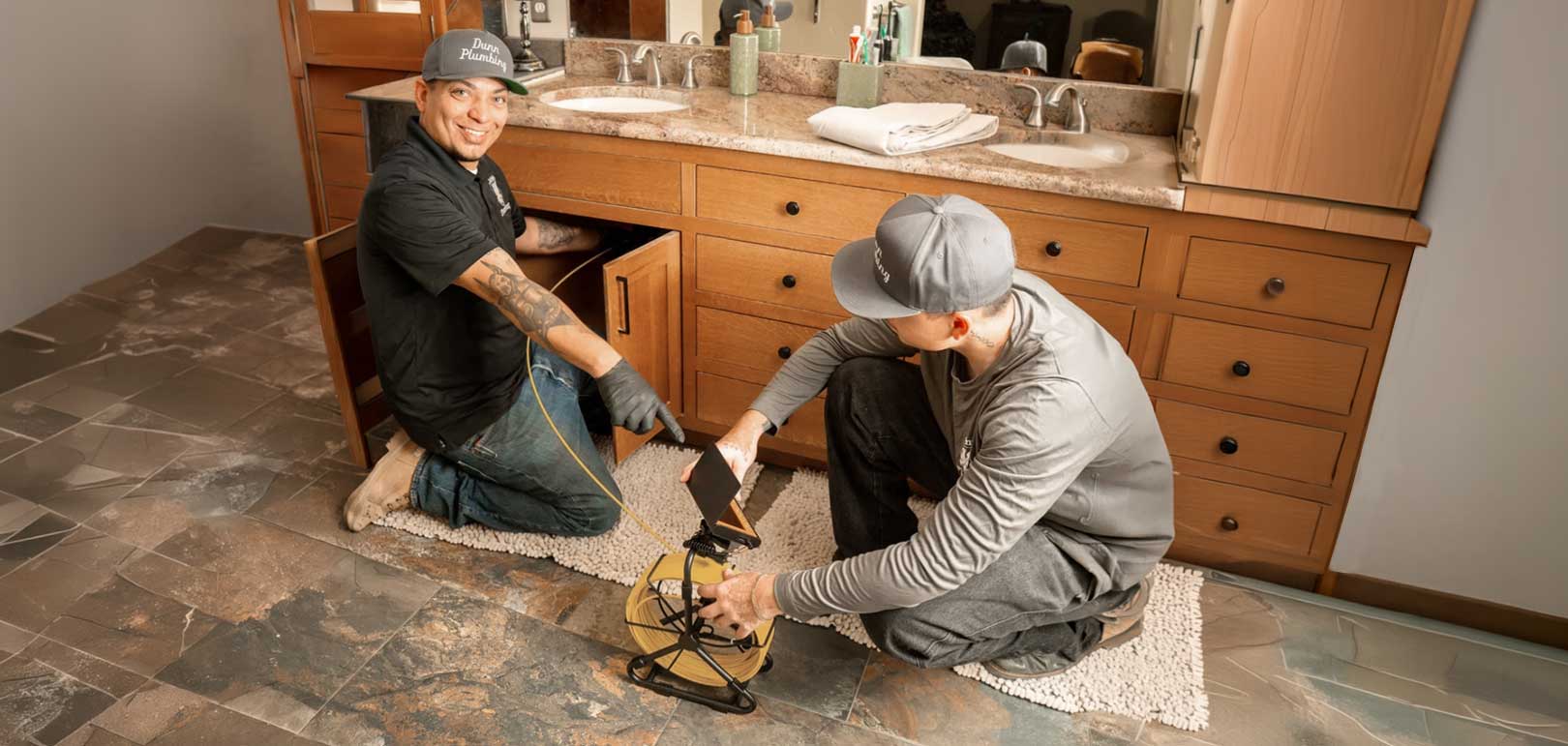
A sewer camera allows the technician and homeowner to see why a drain keeps backing up.
ADDITIONAL STORY OPPORTUNITY
We were called out to an apartment building where another company left because it was late on a Friday, and when we arrived, we saw a broken-off cable sticking out of a cleanout. We found the clog was still present and the previous company had abandoned the cable. Who knows why. Dunn Plumbing’s team excavated the drain and repaired it within two hours, removed the cable, and replaced the pipe the other company had damaged. Another happy emergency plumbing caller was satisfied. Dunn Plumbing always follows through with our repairs and service.
Why Does Dunn Plumbing Use a Camera?
At Dunn Plumbing, the goal is not simply to create a temporary opening through the clog.
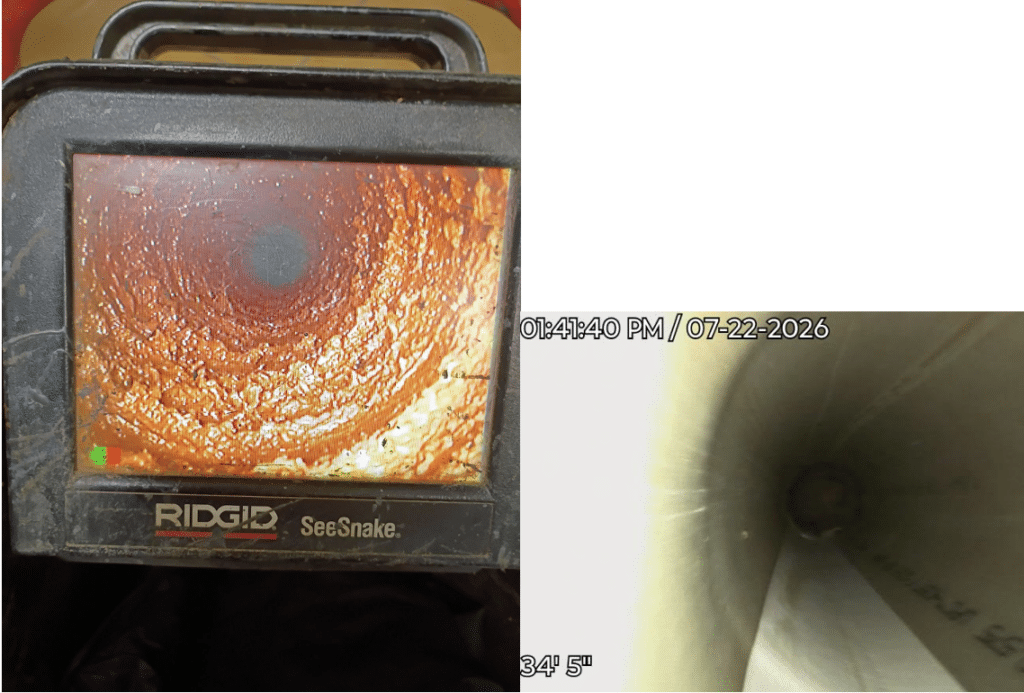
Brian says the team wants “eyes on” the drain so it does not have to make an educated guess. Cory says the camera is used once the water level drops so the technician can confirm whether the problem was solved or merely given a temporary break.
A camera inspection may reveal:
Not every clog requires excavation, hydro jetting, or pipe replacement. The purpose of the camera is to determine what is—and is not—needed.
That is complete transparency in the most literal sense: you can see the pipe for yourself.
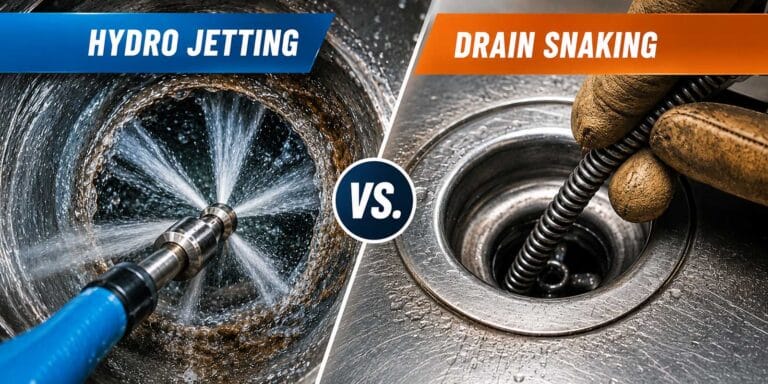
Drain Cable or Hydro Jetting?
A cable and a hydro jetter perform different jobs.
Drain cable
A drain cable is commonly used to open a blockage and restore flow. Different heads and cable sizes may be selected based on the pipe and the suspected obstruction.
Hydro jetting
Hydro jetting uses high-pressure water and specialized nozzles to clean buildup from the interior walls of a suitable drain line.
Brian recommends hydro jetting when the pipe needs a more complete cleaning rather than a basic clog opening. Cory particularly values it in kitchen and laundry lines, where grease can collect lint and other material, creating a sticky interior surface that repeatedly catches debris.
Cory estimates that appropriate hydro jetting can restore a heavily coated drain close to its usable interior capacity and may allow the company to offer a stronger service warranty.
A camera inspection helps determine whether the line is structurally sound enough for jetting and whether jetting is the right method.
DIY or Call a Plumber? Use This Guide
|
Situation |
Try DIY |
Call a plumber |
|---|---|---|
|
Hair visible at the drain opening |
Yes |
If it cannot be removed safely |
|
Removable sink stopper is dirty |
Yes |
If drainage remains slow |
|
One toilet has a minor paper clog |
Try a proper toilet plunger |
If it repeatedly clogs |
|
Small hand snake reaches a shallow clog |
Possibly |
Stop if it binds or cannot pass |
|
Multiple drains are backing up |
No |
Yes |
|
Toilet use causes the shower to gurgle |
No |
Yes |
|
Sewage is entering the tub or shower |
No |
Yes—urgent |
|
Chemical cleaner has already been used |
Do not add anything else |
Yes; warn the plumber |
|
The same clog keeps returning |
No more temporary fixes |
Yes |
|
You suspect roots or damaged pipe |
No |
Yes |
|
You need a powered cable machine |
No |
Yes |
|
Water is near electrical equipment |
No |
Yes—address immediately |
|
There is flooding or uncontrolled leakage |
Shut off water if safe |
Yes—urgent |
When Is a Drain Problem an Emergency?
Call promptly when:
For chemical exposure, follow the product label and contact Poison Control for immediate guidance. Poison Control is available around the clock in the United States at 1-800-222-1222.
Tucson Drain Problems Are Different
Southern Arizona plumbing faces a combination of aging pipe materials, hard water, shifting soil, and determined desert vegetation.
Brian identifies mesquite and oleander roots as frequent sewer offenders. Roots can travel far beyond the visible canopy in search of moisture. Once a root finds a small opening at a pipe joint, it can continue growing inside the line and collect paper, wipes, grease, and other debris.
Older Tucson homes may also contain cast-iron drain piping. Cory is especially concerned about aging cast iron because deterioration can eventually leave homeowners choosing among pipe lining, concrete cutting, excavation, or replacement.
Homes built before the 1970s are more likely to contain cast iron, while clay sewer piping is common in portions of Tucson’s east side and in developments where it was widely installed.
This is why the age of the home and the material of the drain system matter when deciding whether a recurring clog is suitable for another DIY attempt.
Tucson Pipe Materials
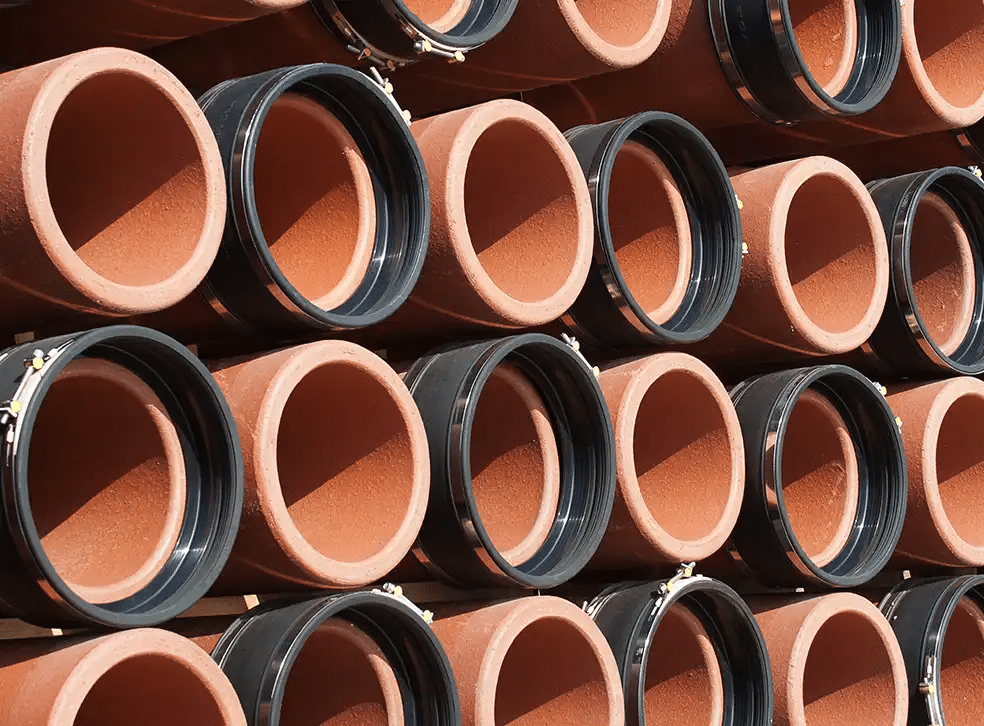
Clay Pipe
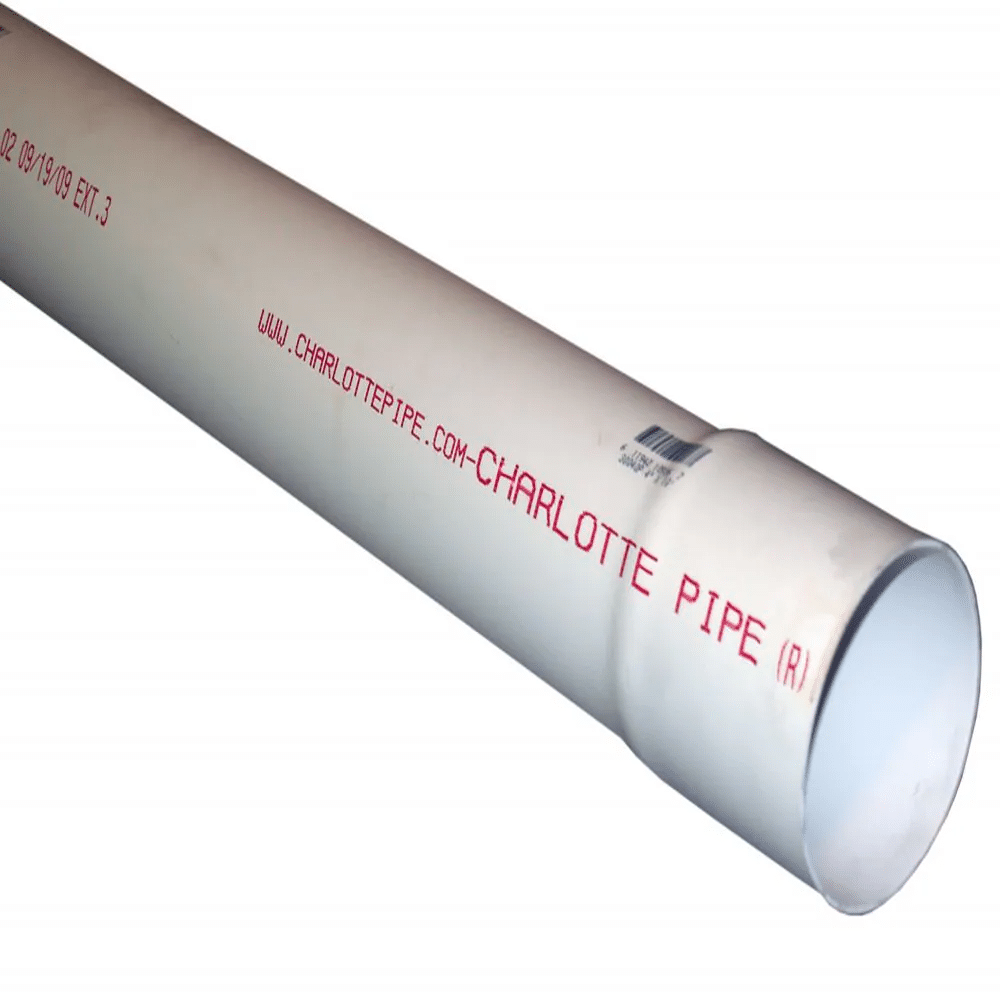
PVC Pipe
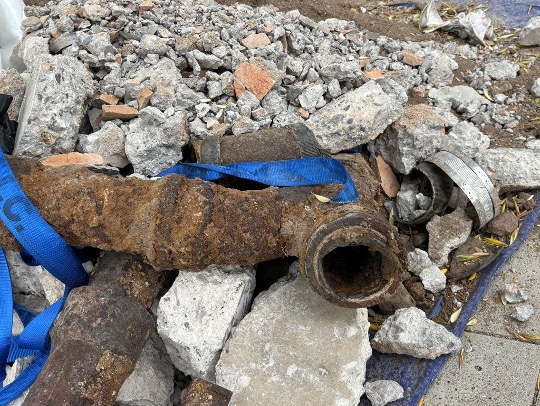
Cast iron pipe
One of many cast iron drain lines that became construction debris.
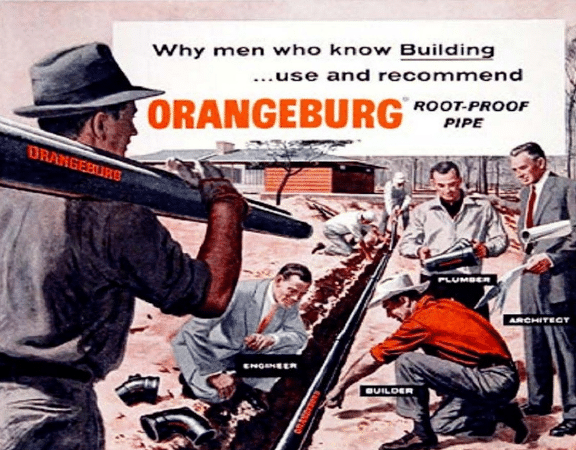
Orangeburg
Thought at the time of installation to be rootproof drain pipes.
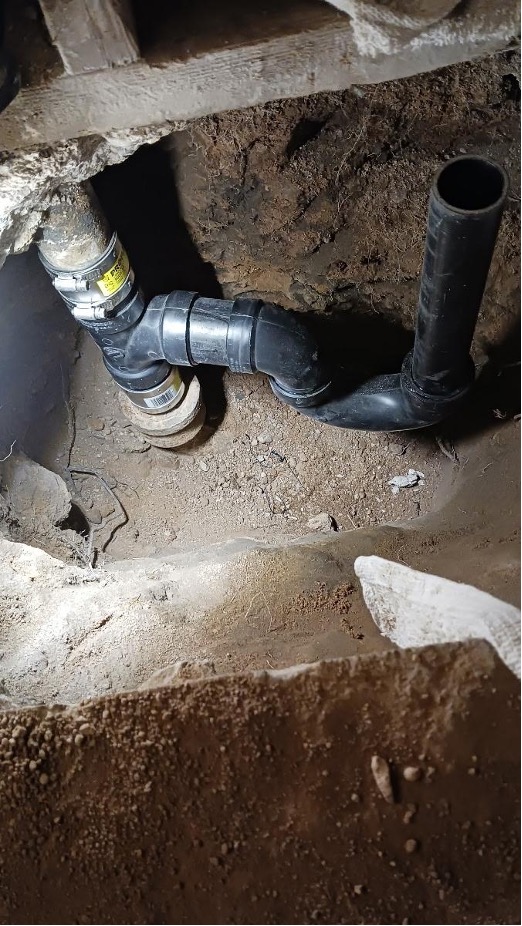
ABS
ABS plumbing supply house used in Tucson, AZ
Tucson homes contain several generations of drain piping, and each material develops different problems as it ages.
The Flexible Trap Problem
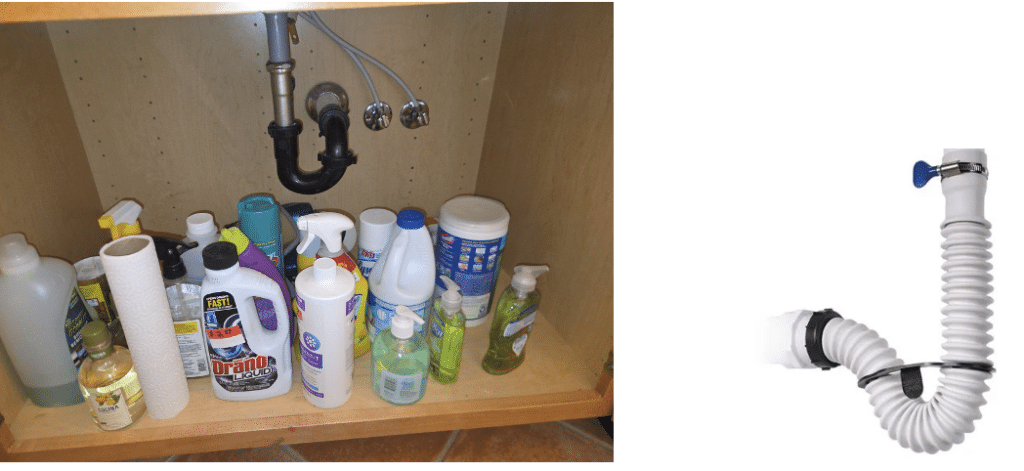
Cory frequently sees flexible accordion-style traps installed under bathroom sinks as an easy DIY repair.
They may be convenient to install, but the rigid interior catches debris more easily than a properly configured smooth-wall trap. Their shape can also create drainage problems and make it difficult for a plumber to offer a meaningful warranty on drain clearing.
Cory’s recommendation is to install the proper smooth plumbing components, even when the flexible version appears faster or easier.
The least expensive part is not always the least expensive solution.
How to Prevent the Next Clog
Brian believes scheduled maintenance prevents many expensive surprises. Cory recommends annual plumbing checkups, water-heater maintenance, and appropriate drain care based on the home’s age and piping materials.
Homeowners can reduce the likelihood of clogs by:
Cory sees fats, oils, grease, and bathroom wipes contributing to drain problems every week. Brian’s advice to homeowners is to make room in the household budget for scheduled plumbing maintenance before a major issue arrives uninvited.
What Makes Dunn Plumbing Different?
Dunn Plumbing does more than clear the immediate obstruction.
The company’s technicians have access to:
Brian says Dunn Plumbing aims to provide homeowners with the information needed to protect one of their largest investments. Cory describes the company’s goal as providing long-term solutions so the same problem does not keep returning.
The company does not charge a service fee or trip charge simply to determine what the plumbing problem is. Customers pay for the work they approve, and financing may be available for qualifying larger repairs.
The guiding principle is simple:
Take care of the client, explain what is happening, and recommend the solution that makes sense for the home.
“I would definitely use this plumbing company again. Micah came to my house and was very professional, and when I had questions, he answered them completely. I would want Micah to come back whenever I had a problem. Many thanks to Micah and thanks to Dunn because I called another company who wanted a lot more to do the job. I would recommend this company to anyone who asks me if I know someone.”
Judith S.
Thank you, Judith!
Frequently Asked Questions
Brian Dunn’s Final Advice
“We’re here to partner with homeowners and help keep their plumbing working. We want customers to understand the process, know what may be needed, and feel comfortable making decisions about their home.”
Brian also reminds customers that he is never too busy for their call. He would rather answer a question early than see a preventable drain problem become a major repair.
Cory Harding’s Final Advice
“Be proactive instead of reactive. No one likes coming home after a hard day and finding a flood.”
Cory recommends annual plumbing inspections for peace of mind, especially in older Tucson homes where underground drain problems are not visible without specialized equipment.
The Dunn Plumbing Promise
We do not believe in selling plumbing services that a homeowner does not need.
When there is a safe and sensible DIY solution, we will say so.
When professional service is needed, we will explain why.
When more than one repair option is available, we will show you what we found and help you understand the differences.
Whether the answer is a cleaned stopper, a properly selected cable, hydro jetting, pipe lining, or repair, the goal is to take care of the client and leave the plumbing system better than we found it.
Need Help With a Clogged Drain in Tucson?
Dunn Plumbing & Drain Service LLC provides drain cleaning, camera inspections, hydro jetting, pipe lining, and sewer repair throughout the Tucson area.
We offer 24/7 emergency plumbing service.
Call Dunn Plumbing at 520-310-0551 or contact us online.