A Tucson Homeowner’s Guide to Recurring Drain Problems
By Brian Dunn, Owner | Dunn Plumbing & Drain Service LLC
Contributions from Cory Harding, Licensed Contractor & Plumbing Expert
You called a plumber.
They ran a snake through the drain.
The water went down.
Problem solved.
Until three weeks later.
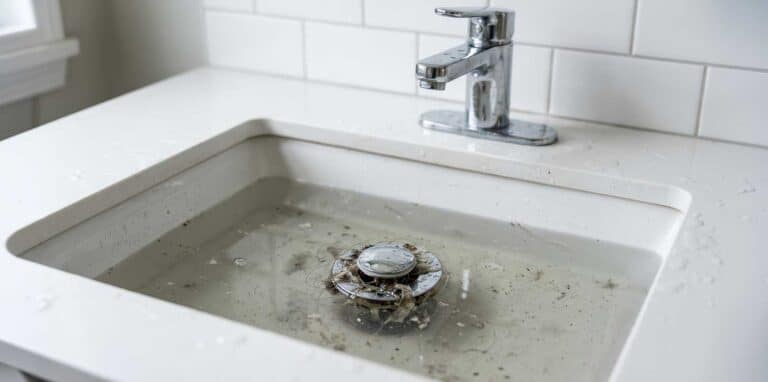
Now the sink is slow again, the toilet is gurgling, or the shower is backing up—and you are wondering why you paid to clear a clog that apparently decided to come home.
A drain that repeatedly clogs is usually trying to tell you something.
Sometimes the original blockage was only partially cleared. Other times, the clog is simply a symptom of a larger problem inside the drainage system.
After decades of working on Tucson plumbing systems, Brian Dunn and Cory Harding have seen recurring clogs caused by everything from grease and wipes to tree roots, deteriorated cast iron, separated clay joints, pipe bellies, foreign objects, and collapsed sections of sewer pipe.
Brian’s advice is simple:
If the same drain keeps clogging, stop asking only how to clear it. Start asking why it keeps happening.
Quick Answer: Why Did My Drain Clog Again?
Common reasons include:
Brian says roots and flushable wipes are among the biggest recurring clog causes he encounters in Tucson. Cory says fats, oils, grease, and bathroom wipes are problems he sees regularly.
The EPA also identifies fats, oils, grease, wipes, and other inappropriate materials as contributors to sewer blockages and overflows.
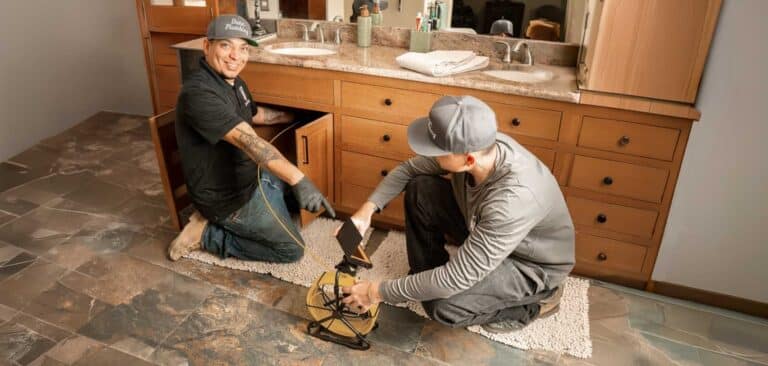
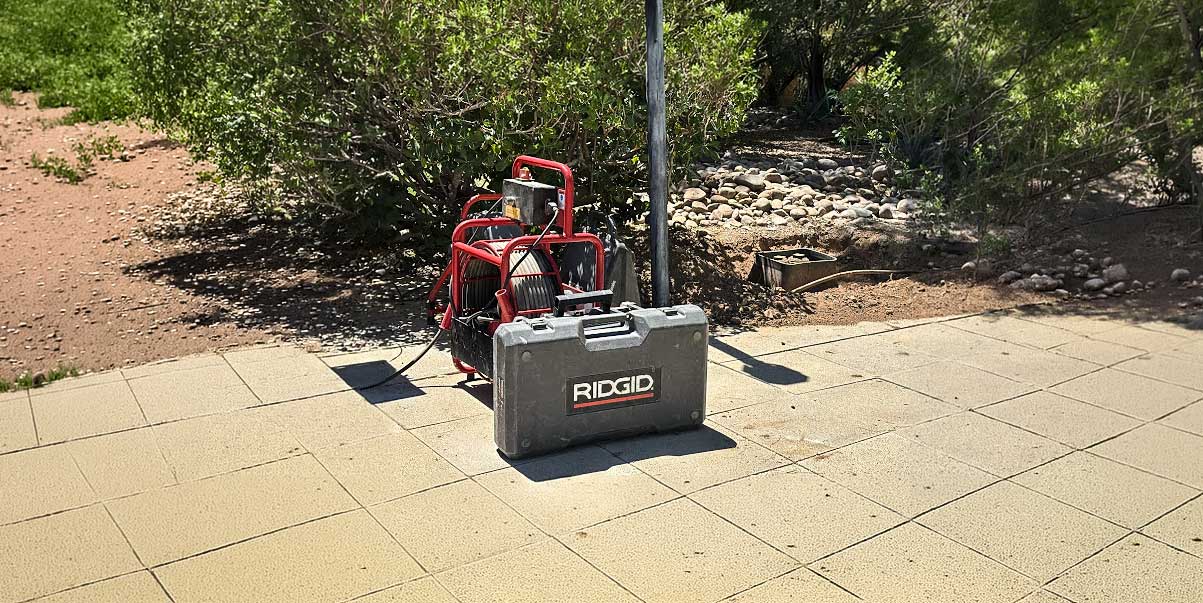
Dunn Plumbing technician preparing for an inspection of a recurring clogged drain with a sewer camera in Tucson, Arizona.
First: What Does “Snaking a Drain” Actually Do?
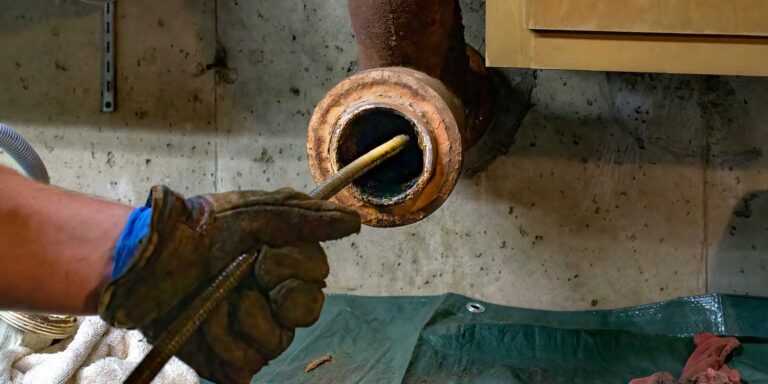
Drain snaking—or cabling—is an important plumbing tool.
A rotating cable is fed through the drain to break through or remove an obstruction.
Depending on the problem, that may be exactly what the drain needs.
But there is an important distinction:
Opening a clog and cleaning a pipe are not necessarily the same thing.
Imagine a pipe whose walls are heavily coated with grease.
A cable may create a pathway through the material, so water begins flowing again.
That is good.
But much of the buildup may still be attached to the walls.
Hair, lint, food particles, wipes, and other waste can begin collecting again.
Eventually, another clog develops.
This does not mean drain cabling is ineffective.
It means the pipe’s condition determines what treatment is appropriate.
Brian Dunn’s Advice: “We Need Eyes On It”
Brian strongly recommends investigating recurring drain problems instead of repeatedly guessing.
His preference on drain calls is to use camera equipment when conditions and access allow.
Why?
Because Brian wants to answer questions such as:
Brian describes his approach this way:
“We need to have eyes on to see what is actually going on and not guess.”
Cory agrees. Once the water level is down, he wants to determine whether the problem has truly been addressed rather than simply placing a temporary “Band-Aid” on it.
That camera can be the difference between paying for another clog clearing and finally understanding why the clog keeps coming back.
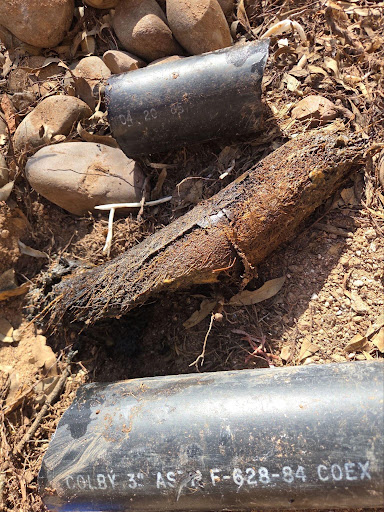
Camera inspection allows the homeowner and plumber to see conditions inside the drain instead of relying only on symptoms.
Real Job Spotlight: Three Plumbers Cleared the Same Toilet
One of Dunn Plumbing’s recent service calls is a perfect example.
A homeowner had already called three different plumbing companies about a toilet that kept clogging.
Each company cleared the toilet.
It worked afterward.
Then the problem returned.
When Dunn Plumbing arrived, the team restored flow again—but this time the job didn’t end when the toilet started flushing.
They put a camera into the drain line.
The camera revealed a small collapsed section of pipe.
Waste could pass through temporarily after cabling, but the damaged area continued catching material. That was why the homeowner kept experiencing the same problem.
The collapsed section was repaired.
The recurring clog stopped.
The lesson is important:
All three clog clearings treated the symptom. The camera finally revealed the cause.
Sometimes the most expensive plumbing problem is not the repair.
It is paying repeatedly for the same temporary solution.
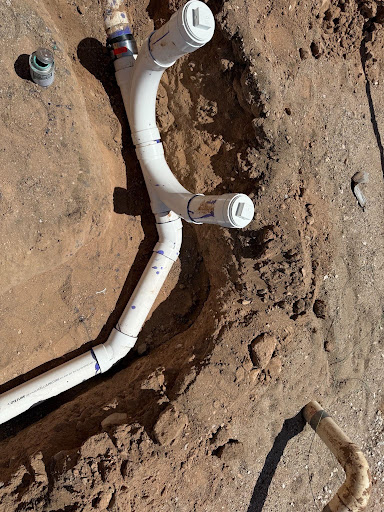
Where the line collapse we solved two problems: dug up and replaced the collapse drain and installed cleanouts for easy access to clean the drain system.
Reason #1: The Pipe Was Opened but Not Completely Cleaned
This is especially common in drain lines carrying grease and soap.
Cory often sees problems involving FOG—fats, oils, and grease.
Grease does not always create one solid object that can simply be pulled out.
Instead, it can coat the interior of a drain.
Then other materials stick to it.
In kitchen and laundry lines, that may include:
Cory describes grease as creating a “clingy” drain system that catches material passing through the pipe.
The EPA similarly notes that grease can stick to sewer-pipe interiors, accumulate over time, and contribute to serious blockages.
Real Job Spotlight: Two Slow Drains, One Dirty Drain System
A homeowner called Dunn Plumbing because the bathroom and laundry drains were both moving slowly.
The customer understandably thought there were probably separate clogs near each location.
However, once the system was evaluated, the fixtures turned out to be symptoms of a larger problem.
The drain lines were coated with a combination of:
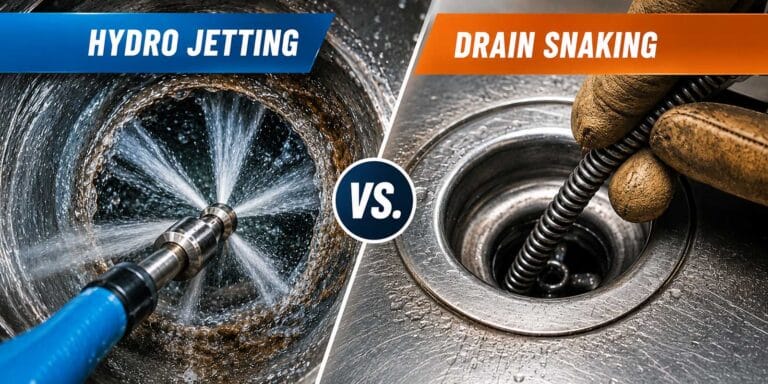
Instead of repeatedly opening individual fixture clogs, Dunn Plumbing recommended hydro jetting the appropriate drain lines.
High-pressure water and specialized nozzles were used to clean material from the interior pipe walls.
After cleaning, the bathroom and laundry were draining properly again.
The homeowner originally called about two slow fixtures.
The real problem was the condition of the drain system connecting them.
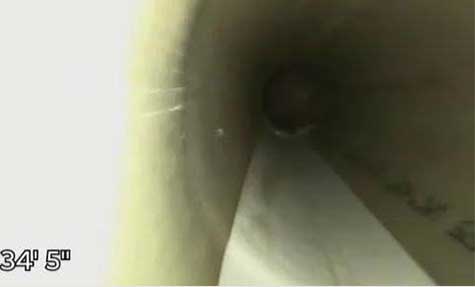
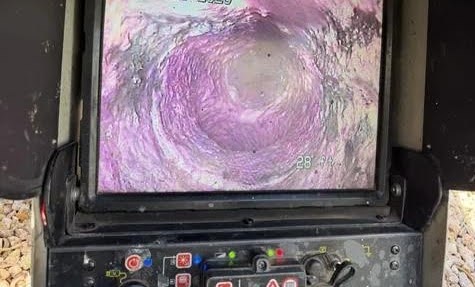
The bathroom and laundry appeared to have separate clogs, but inspection revealed buildup throughout the drain system.
Reason #2: Tree Roots Are Growing Into the Sewer
Roots are one of Tucson’s classic sewer problems.
Brian specifically identifies mesquite and oleander roots as frequent offenders.
Desert trees and shrubs are extremely good at finding water.
Brian notes that root systems can extend far beyond what homeowners see above ground. Once roots locate moisture at a vulnerable sewer joint or crack, they can begin entering the pipe.
A cable may cut through enough roots to restore flow.
But unless the underlying entry point is addressed, the roots can return.
Think of trimming a bush.
Removing the branches does not remove the plant.
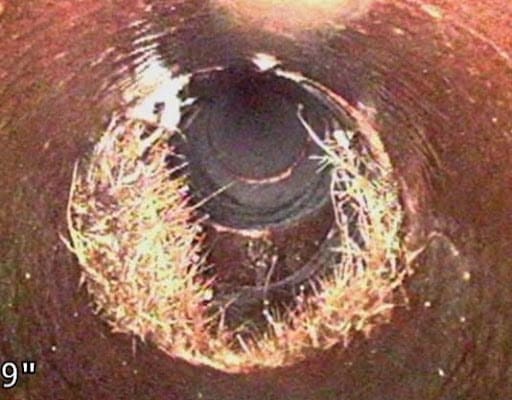
Roots can enter through small openings in sewer joints and repeatedly catch paper and waste.
Reason #3: The Cast Iron Is Deteriorating
Older Tucson homes frequently contain cast-iron drainage piping.
As cast iron ages, the inside can become rough.
Brian has described badly deteriorated cast iron as almost Velcro-like.
Material that once moved smoothly through the pipe begins catching on the uneven interior surface.
That may include:
Cory is particularly concerned about aging cast iron because waiting too long can reduce the homeowner’s repair options.
A line that might have been suitable for maintenance or lining earlier can eventually deteriorate badly enough to require concrete cutting, excavation, or replacement.
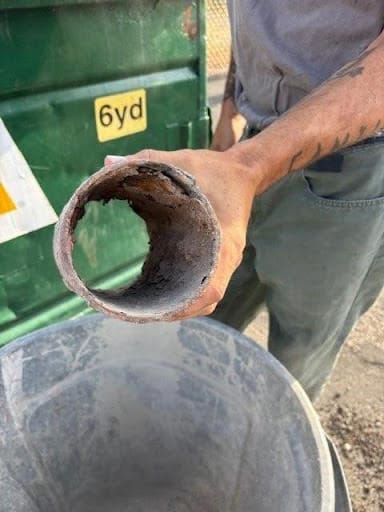

Older cast iron can become rough internally, creating surfaces where waste repeatedly catches.
Reason #4: Clay Sewer Joints Have Separated
Clay pipe itself can last a long time.
The joints are often the weak point.
As soil moves, small openings can develop where sections meet.
Those openings create opportunities for root intrusion.
The result may be:
clear drain → roots grow → clog → roots cut → drain clears → roots grow again.
If that cycle sounds familiar, the problem may not be the material going down the drain.
It may be the condition of the sewer itself.
Reason #5: The Pipe Has a Belly
Drainage depends on gravity.
A properly installed drain has a slope so wastewater moves toward the sewer.
If part of the pipe settles, a low section—or belly—may develop.
Water and waste can collect there instead of flowing freely.
A cable may pass through the area.
That does not correct the slope.
Repeated buildup can occur.
Camera inspection and experienced evaluation help determine whether a low spot is contributing to repeated backups.
Reason #6: Something Is Stuck in the Pipe
Plumbers find strange things in drains.
Sometimes they find very strange things.
Dunn Plumbing once investigated a recurring drain problem at an auto shop.
After clearing the line and inspecting it with a camera, the team discovered a wrench inside the drain.
A very real wrench.
In an auto shop.
How it got there remains between the wrench and the plumbing system.
The important part was that normal drain clearing could not remove it. The affected area eventually required excavation so the obstruction could be retrieved.
Foreign objects can include:
A camera can turn a mystery clog into a very obvious explanation.
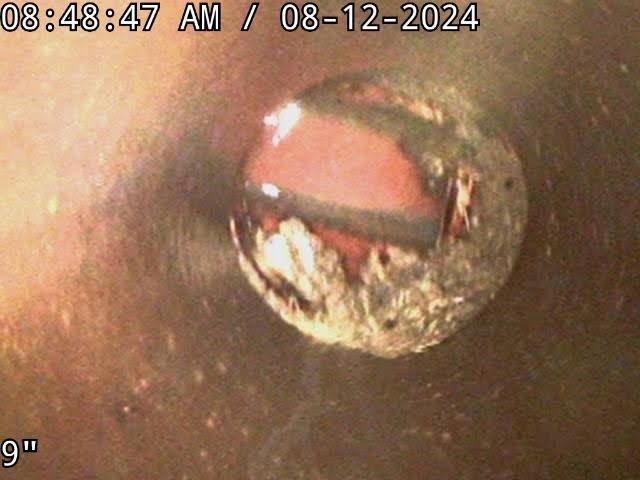
Foreign object discovered during sewer camera inspection by Dunn Plumbing.
Reason #7: “Flushable” Does Not Always Mean Trouble-Free
Brian considers flushable wipes one of Tucson’s major clog contributors.
Cory sees bathroom wipes creating drain problems regularly.
The EPA also specifically identifies some products marketed as “flushable,” including wipes, among materials that can contribute to sewer-system problems.
The safest rule for most household toilets is wonderfully uncomplicated:
Human waste and toilet paper belong in the toilet.
Most other things belong somewhere else.
Your sewer line does not care what the package promised.
Reason #8: The Wrong Drain Machine Was Used
There is no universal drain snake.
Brian and Cory explain that professional plumbers carry multiple drain machines because homes contain numerous pipe sizes and different obstructions require different approaches.
Factors include:
Cory notes that an average three-bedroom, two-bathroom home can contain numerous sizes of drain piping. Brian says experience selecting the correct treatment can help preserve the drain and reduce unnecessary expense.
Using a cable that is too small may not clean effectively.
Using equipment that is too aggressive can create other problems.
When Is Hydro Jetting Better Than Another Snaking?
Hydro jetting may make sense when inspection shows substantial buildup inside a structurally suitable drain.
It is often particularly useful for:
Brian describes hydro jetting as appropriate when it is time for a full cleaning of the pipe rather than simply clearing a clog.
Cory says it can be especially valuable after cabling grease-heavy kitchen and laundry lines.
That does not mean every clogged drain needs hydro jetting.
Sometimes a cable is exactly the correct solution.
Sometimes the pipe needs repair.
Sometimes it needs lining.
Sometimes it needs excavation.
Diagnosis determines the treatment.
What Should I Do If My Drain Keeps Clogging?
If the same drain has clogged repeatedly:
Stop treating each clog as a new event.
Write down how often it happens.
Pay attention to other fixtures.
Gurgling or slow drainage elsewhere can provide useful clues.
Tell the plumber what has already been done.
That includes:
Ask whether camera inspection is appropriate.
Especially if the clog has repeatedly returned.
Ask to see the results.
When footage or photos are available, review them.
Ask what is causing the problem.
Not merely what service is being recommended.
Recurring Drain Checklist
|
Symptom |
Possible Cause |
|
|---|---|---|
|
Kitchen clog repeatedly returns |
Grease/buildup |
|
|
Laundry repeatedly slow |
Soap, lint, grease, or branch-line issue |
|
|
Toilet repeatedly clogs |
Wipes, roots, pipe damage, or obstruction |
|
|
Several fixtures slow |
Larger branch/main-line problem |
|
|
Older-home drains repeatedly clog |
Deteriorated piping |
|
|
Seasonal/root-related backups |
Root intrusion |
|
|
Drain works briefly after snaking |
Partial opening or underlying defect |
|
|
Camera shows standing water |
Possible slope/belly issue |
|
|
Cable cannot pass |
Obstruction or structural problem |
What a Tucson Homeowner Said After Finally Solving a Recurring Drain Problem
Micah came, and unclogged the pipes again after another company had been out, and with a camera inspection he deduced what the possible issue was. Hydro jetting was the answer. Really thankful for what he did.
Frequently Asked Questions
Brian Dunn’s Final Advice
Brian estimates that more than half of the drain problems he encounters could have been prevented or addressed earlier.
His advice is not to panic every time a sink drains slowly.
It is to recognize patterns.
Once is a clog.
Twice deserves attention.
Repeatedly paying to clear the same drain without asking why is usually not a maintenance plan.
Cory Harding’s Final Advice
Cory believes homeowners are often surprised to learn that drains benefit from maintenance just like other systems in the home.
His philosophy is:
Be proactive instead of reactive.
Finding buildup, deteriorated pipe, or root intrusion early can create more repair choices and fewer emergency decisions later.
The Dunn Plumbing Promise
At Dunn Plumbing & Drain Service LLC, our goal is not simply to make water disappear down the drain before we leave.
We want to understand why the problem occurred.
If cabling is appropriate, we’ll explain it.
If the line needs cleaning, we’ll explain that.
If a camera inspection reveals a repair issue, we’ll show you what we found.
And if the simplest solution is the right solution, we’ll tell you that too.
Call Dunn Plumbing & Drain Service LLC: 520-310-0551