
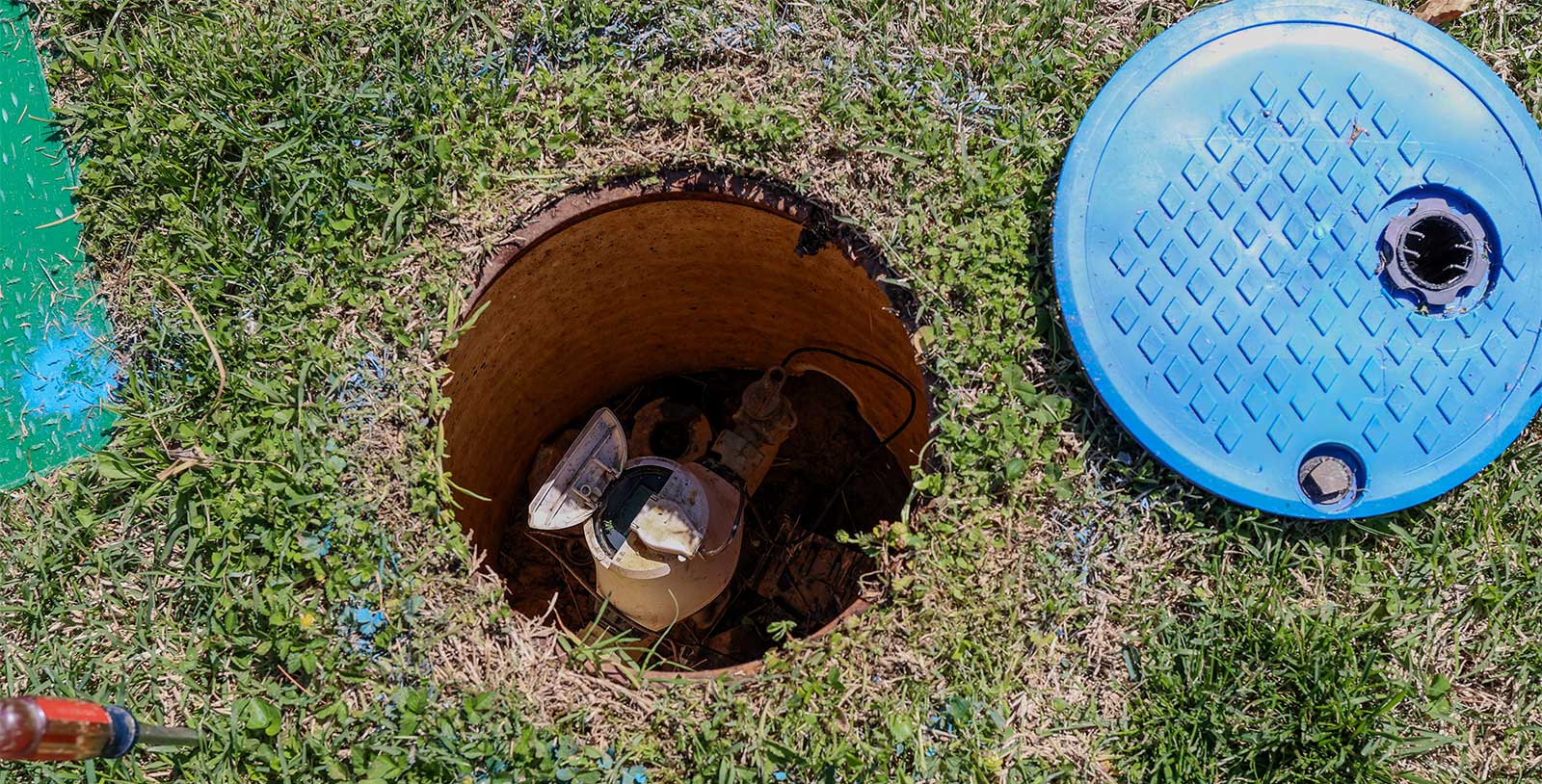
A Tucson Homeowner’s Guide to Water Meter and Underground Water-Line Leaks
By Brian Dunn, Owner | Dunn Plumbing & Drain Service LLC
Contributions from Cory Harding, Senior Plumbing Expert
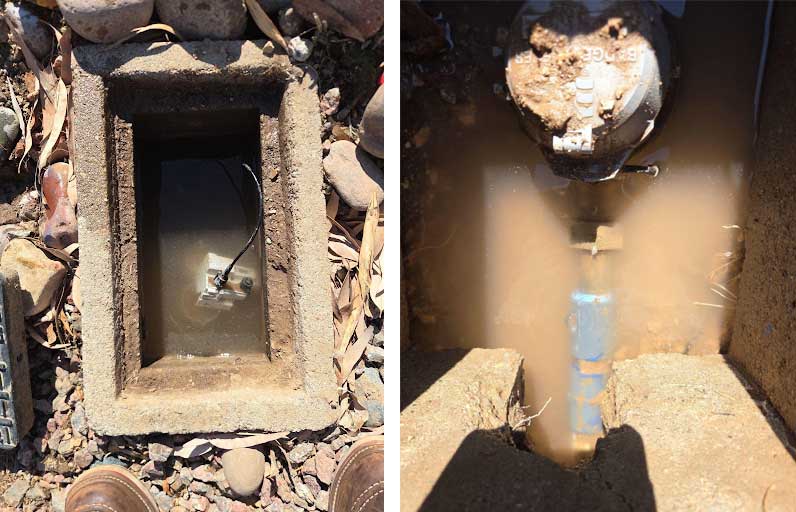
You walk toward the street and notice something unusual.
The ground around your water meter is wet.
In Tucson.
When it hasn’t rained.
That deserves attention.
A wet spot near a water meter does not automatically mean you have a broken water line, but it can be one of the earliest visible signs of an underground leak.
Possible causes include:
The most important thing is determining where the water is coming from and which side of the meter is involved.
Brian Dunn’s advice:
“Water where it shouldn’t be is worth investigating—especially in the desert.”
Quick Answer: Why Is the Ground Wet Around My Water Meter?
If the soil around your meter stays wet when:
you may have a leak.
Tucson Water maintains water infrastructure up to the meter, while the property owner is generally responsible for the private service line running from the meter toward the home.
That distinction matters because the correct first call may depend on which side of the meter is leaking.
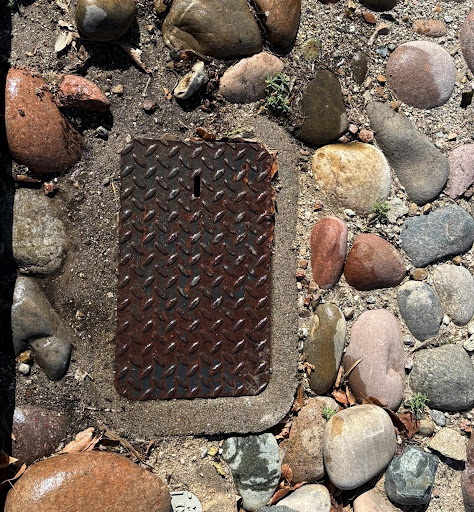
First Question: Did It Rain or Did the Irrigation Run?
Before assuming the worst, rule out the obvious.
Ask:
Sometimes wet ground has a perfectly boring explanation.
And in plumbing, boring explanations are wonderful.
But if the same spot remains wet or repeatedly becomes saturated without an obvious source, move to the next step.
Brian Dunn’s Advice: Don’t Start Digging Around the Meter
Homeowners understandably want to investigate.
But the water meter and meter box are not a great place for enthusiastic DIY excavation.
Meter boxes can contain:
- Utility equipment
- Valves
- Piping
- Sharp debris
And damaging meter components can create an entirely new plumbing problem.
Tucson Water cautions customers against damaging or tampering with city meter equipment and specifically notes that meter boxes can contain hidden hazards.
So look.
Observe.
Take photos.
But do not start twisting utility valves or excavating around the meter unless you know exactly what you are doing.
Sometimes the fastest path to saving money is putting the shovel back in the garage.
Who Owns the Pipe Around the Water Meter?
This question causes a lot of confusion.
In general, Tucson Water maintains the public water system and service line up to the water meter.
The homeowner is generally responsible for the private service line from the meter toward the house or property.
So imagine:
City water main → utility service line → WATER METER → homeowner’s service line → house
If the problem is on the utility side or involves the city-owned meter equipment, Tucson Water may need to investigate.
If the leak is on the homeowner’s side of the meter, a licensed plumbing contractor may be needed.
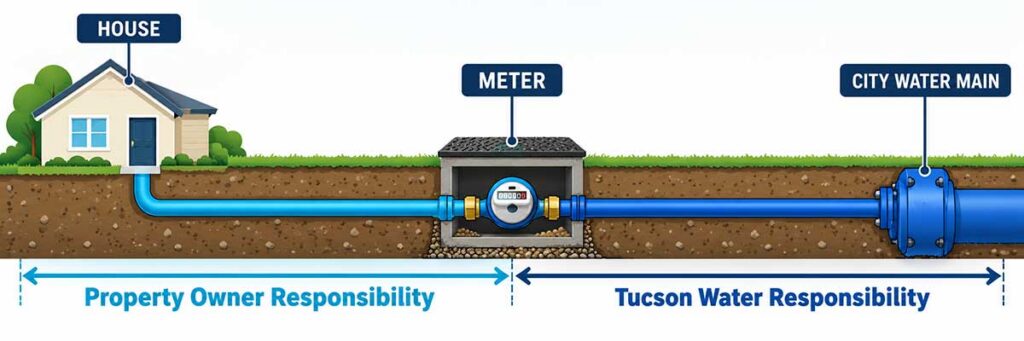
Diagram showing Tucson Water and homeowner responsibility around residential water meter.
How Can I Tell Whether Water Is Still Flowing?
Your water meter can provide an important clue.
Tucson Water recommends turning off all faucets and water-using equipment first.
That includes things such as:
- Faucets
- Toilets that are actively filling
- Washing machine
- Dishwasher
- Irrigation
- Evaporative cooler
- Ice maker when practical
- Other water-consuming equipment
Then look at the meter.
Mechanical meter
Note the position of the dial or low-flow indicator.
Wait approximately 15–30 minutes without using water.
If it changes, water may be flowing somewhere on the property.
Digital meter
Look at the flow-rate display.
If everything is off but the meter shows flow above zero, a leak or other ongoing water use may exist.
The meter is basically your home’s accountant.
It does not know why the water disappeared.
It just knows somebody used it.
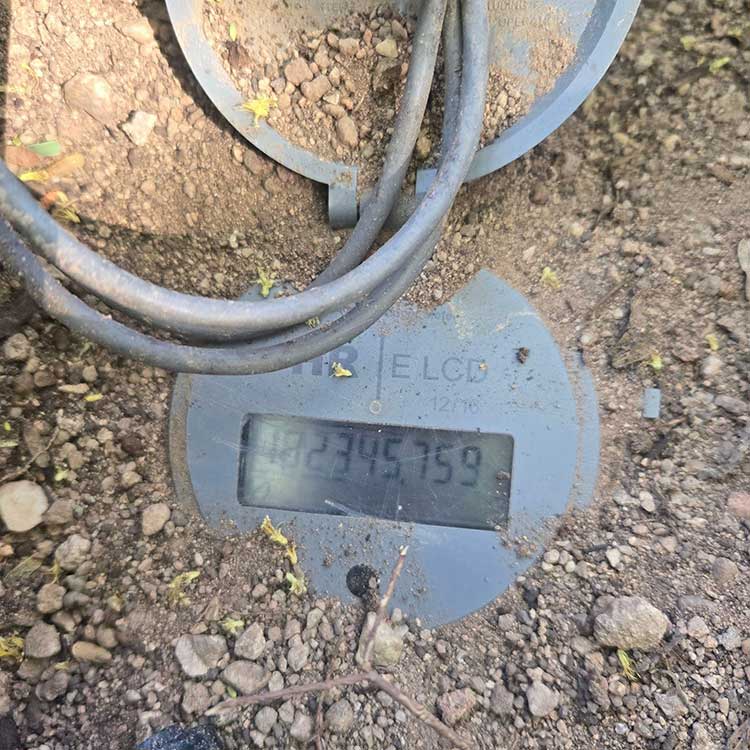
With all water use turned off, continued meter movement may indicate water is flowing somewhere on the property.
A Simple Test: Is the Leak Inside the House or Between the Meter and the House?
Tucson Water describes a useful isolation test.
After turning off all intentional water use, locate the home’s private shutoff valve.
Turn off the house valve if you know which valve it is and can operate it safely.
Then observe the meter.
If the meter still shows water flowing:
The leak may be located between the water meter and the house shutoff—in the underground private service line.
If the meter stops:
The water loss may be somewhere downstream inside or around the house.
That could include:
This test does not locate the leak.
It helps narrow the search.
And narrowing the search is exactly what professional leak detection is designed to do.
Cory’s Corner: The Leak Doesn’t Always Surface Where the Pipe Broke
Underground water behaves differently than many homeowners expect.
Water can follow:
So the wettest spot is not necessarily sitting directly above the leak.
This is important.
Seeing wet ground beside the meter does not mean:
“Dig exactly here.”
It means:
“Investigate the water system around this area.”
Professional leak detection can help reduce unnecessary digging by locating the likely source before excavation begins.
That is particularly valuable when the water line runs beneath:
Finding the leak before opening the ground is usually preferable to turning the yard into an archaeological expedition.
What Causes Underground Water Lines to Leak?
Several things can contribute.
Aging pipe
Older water-service materials can eventually deteriorate.
Movement in the soil
Underground piping can be stressed by shifting soil or settlement.
Corrosion
Some metallic water lines deteriorate over time.
Failed connections
Fittings, joints, or transitions between materials can develop leaks.
Roots and landscaping activity
Roots and digging can disturb buried services.
Excessive pressure
High water pressure can stress plumbing components and connections.
Accidental damage
Landscaping, fencing, excavation, or construction work can damage a buried water line.
And sometimes a pipe simply reaches the point where it has completed its career and would like to retire.
Unfortunately, pipes rarely submit two weeks’ notice.
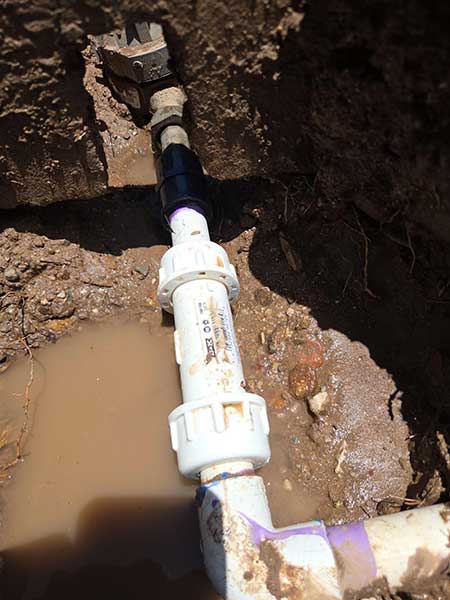
Real Job Spotlight: The Wet Soil Was Only the First Clue
At about 7:00 one morning, a homeowner was taking her dog for a walk when she noticed something unusual:
Water was pooling around her water meter — and around the neighbor’s meter right next to it.
Naturally, her first question was:
“Should I call the city?”
Instead of guessing, Dunn Plumbing offered to come out and take a look at no charge so she would know what to do next.
Our technician arrived within about an hour.
After inspecting the meter area and checking the home’s plumbing, we found something interesting:
The water appeared to be on the homeowner side of the meter, but the leak itself seemed to be coming from the neighboring property.
So we went one step further and performed a quick plumbing check at our customer’s home to make sure nothing else was going on.
Good news:
Her plumbing checked out just fine.
She contacted her neighbor, and we waited for them to return home.
When they arrived, we showed them the wet area and asked a simple question:
“Have you noticed a higher water bill lately?”
Their answer came quickly:
“YES!”
Well… mystery partially solved.
That unexplained higher water bill suddenly made a lot more sense.
We inspected the neighboring home, identified the problem, and were able to offer repair options that could be completed that same day.
The homeowners were relieved to finally understand where the extra water — and extra expense — had been going.
We also let them know that after the repair, they should contact their water provider and provide documentation of the completed work, because some utilities may offer adjustments for qualifying high-water-use situations after a leak is repaired.
What started as a morning dog walk and a suspicious wet spot turned into a hidden-leak diagnosis for the house next door.
Sometimes plumbing problems are like detective stories.
You just have to follow the water.
The wet soil was only the first clue.
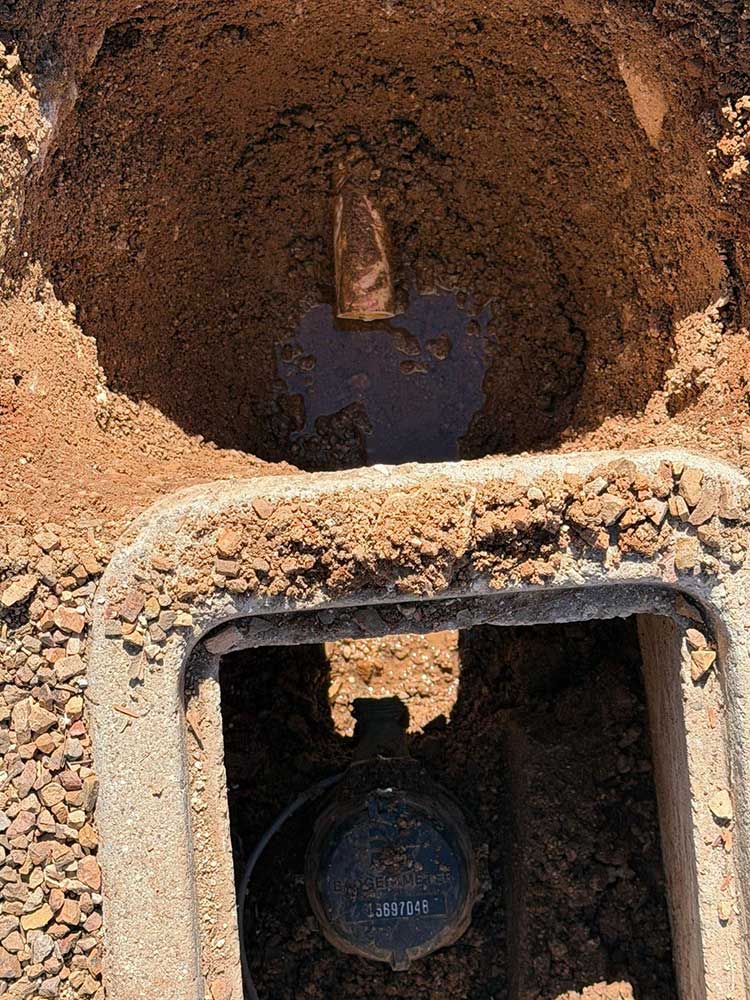
What If Water Is Actually Inside the Meter Box?
A little moisture inside a buried meter box is not automatically proof of a plumbing failure.
But:
deserve investigation.
Do not assume responsibility until the source is identified.
If you suspect the leak involves the city meter or utility side, contact Tucson Water.
If Tucson Water confirms the meter is functioning but water is still flowing on the private side, a licensed plumber can investigate the homeowner’s system.
Is a Wet Spot Near the Meter an Emergency?
Sometimes.
Call promptly when:
Schedule leak detection soon when:
Ignoring an underground leak is rarely a good long-term strategy.
Water is patient.
It can leak 24 hours a day without getting tired.
What Will a Professional Leak-Detection Visit Look For?
Depending on the property and suspected leak, a professional may evaluate:
Dunn Plumbing offers non-invasive leak-detection services for hidden plumbing leaks in yards, walls, and under slabs.
The objective is:
Locate before excavating whenever possible.
Before Anyone Digs
If an underground water line may need to be exposed, buried utilities should be located first. Arizona 811 coordinates marking of underground utility lines before excavation. The City of Tucson also directs people to contact Arizona 811 before digging. Tucson Arizona
Should I Call Tucson Water or a Plumber?
Use this as a general guide:
|
Situation |
Best First Call |
|---|---|
|
Suspected leak at city meter equipment |
Tucson Water |
|
Broken public water main |
Tucson Water |
|
Leak between meter and home |
Licensed plumber |
|
Meter shows flow after house valve is shut |
Licensed plumber/private line investigation |
|
Interior plumbing leak |
Licensed plumber |
|
Irrigation leak |
Irrigation contractor/plumber depending on system |
|
Unsure whether meter itself is leaking |
Tucson Water can investigate meter condition |
|
Active private-line flooding |
Plumber/emergency |
What a Tucson Homeowner Said After Leak Detection
“Mario was amazing. It literally took like five minutes for him to solve the problem. We love him bc our water bill went from 100 to something to 500. Thank you Mario!!!!! You deserve a raise!!!!!! He came by for a water leak detection.”
– Sam
Frequently Asked Questions
Brian Dunn’s Final Advice
A wet area near your meter is not a reason to panic.
It is a reason to investigate.
First, eliminate obvious irrigation or weather causes.
Then determine whether your meter shows water moving when nothing should be using water.
If it does, find out why.
Brian’s broader philosophy is to identify plumbing problems early rather than waiting until a small issue becomes an expensive emergency. Dunn Plumbing emphasizes proactive maintenance and helping homeowners understand what is happening in their systems.
Cory Harding’s Final Advice
Cory’s rule applies perfectly here:
“Be proactive versus reactive.”
A small wet spot is much easier to address than a failed water line that has already undermined landscaping, concrete, or the home.
The earlier you identify the problem, the more choices you usually have.
The Dunn Plumbing Promise
At Dunn Plumbing & Drain Service LLC, we believe the first job is to find the problem.
Not guess.
Do not start digging randomly.
Find it.
Explain it.
Then discuss the repair options.
Dunn Plumbing offers professional leak detection and water-line repair throughout Tucson and surrounding Southern Arizona communities.
Call Dunn Plumbing & Drain Service LLC: (520) 310-0551